Clutch Master and Slave Cylinders: How Clutch Hydraulics Work, Common Faults and Fitting Tips

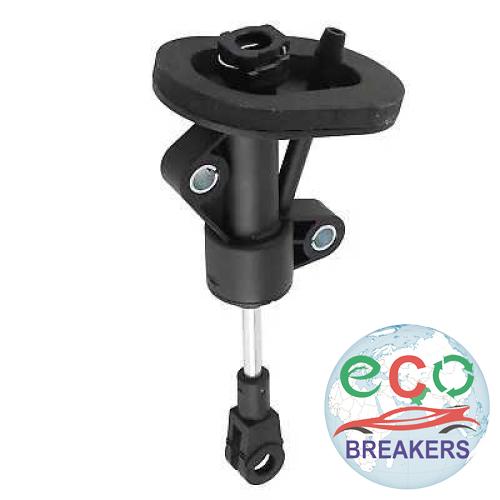
Clutch Master Cylinder

Short Description

How the clutch master cylinder and slave (release) cylinder turn pedal pressure into clutch movement, what goes wrong with them, and how to fit replacements properly.

Details

Most modern cars with a manual gearbox don't operate the clutch with a cable - they use a small hydraulic system, working on the same principle as the brakes. Two parts do the work: the clutch master cylinder at the pedal and the clutch slave cylinder (also called the release cylinder) at the gearbox. When either one fails, the clutch pedal usually tells you straight away.
How Clutch Hydraulics Work

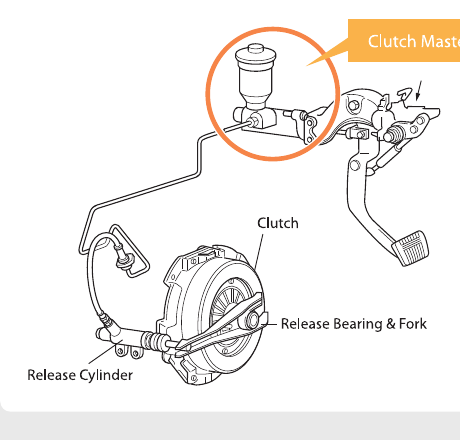
Clutch hydraulic system layout
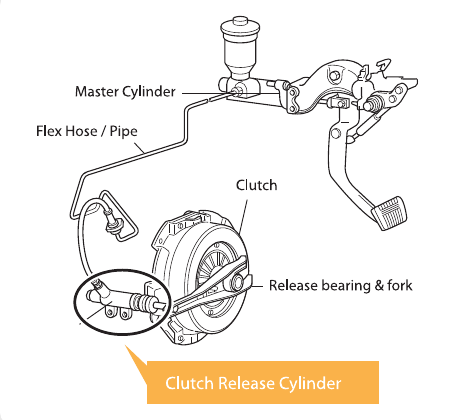
The clutch hydraulic circuit: pedal and master cylinder, pipe and flexible hose, release (slave) cylinder, release fork and bearing.

When you press the clutch pedal, the pedal lever pushes a rod into the master cylinder. The master cylinder turns that mechanical push into hydraulic pressure, which travels down a pipe and flexible hose to the slave cylinder on the gearbox. The slave cylinder turns the pressure back into movement, pushing on the clutch release fork, which presses the release bearing against the clutch cover's diaphragm spring and disconnects the engine from the gearbox. Let the pedal up, and springs push everything back while the fluid returns to the master cylinder and the clutch re-engages.
Inside the Clutch Master Cylinder

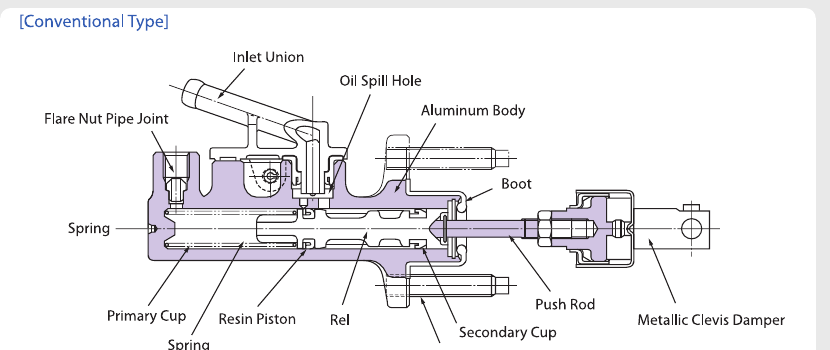
Clutch master cylinder cross-section
Cross-section of a conventional clutch master cylinder: body, piston, primary and secondary cups, return spring, push rod and boot.

The master cylinder is a precision-bored body containing a piston, two rubber seals (cups) and a return spring. The primary cup on the leading side of the piston is the one that builds pressure: as the pedal goes down, it moves past the small port leading to the fluid reservoir, seals it off, and forces fluid out into the pipe. The secondary cup at the back guides the piston and stops fluid escaping past it. When the pedal is released, the return spring and the fluid pressure push the piston back and the port reopens so fluid can return to the reservoir.

Master cylinder variations

Master cylinders that look similar can differ in ways that matter when you buy a replacement:

  • a separate reservoir connected by a hose, or a reservoir mounted directly on the cylinder;
  • with or without stud bolts for mounting;
  • with or without a clevis damper on the push rod (a small damper that smooths pedal feel);
  • with or without a clutch booster.

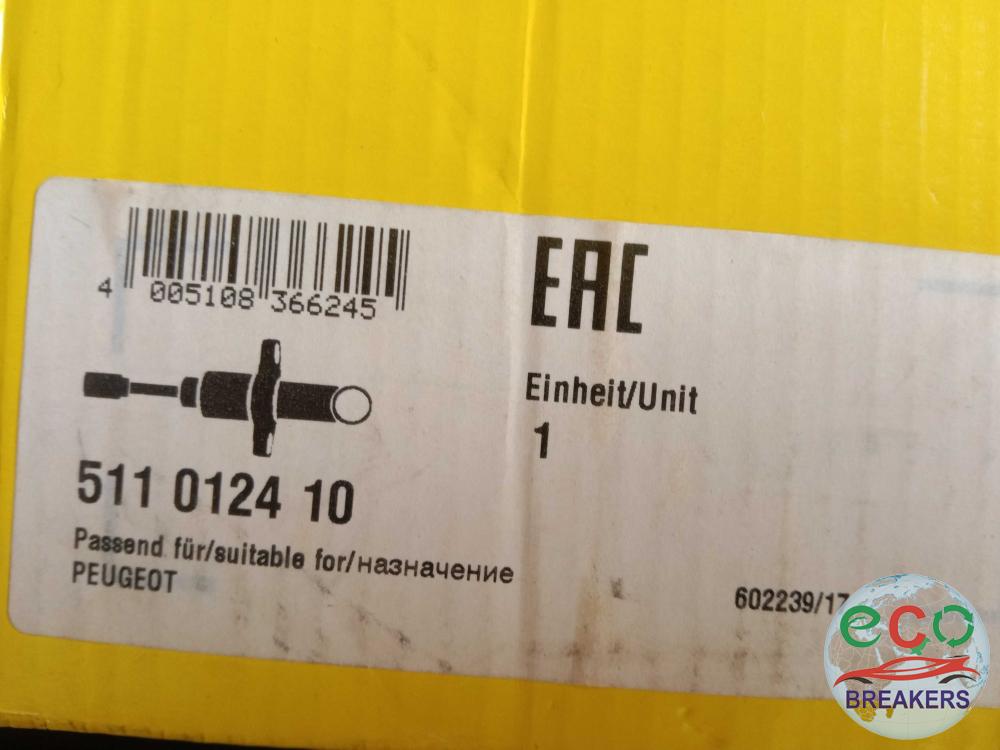
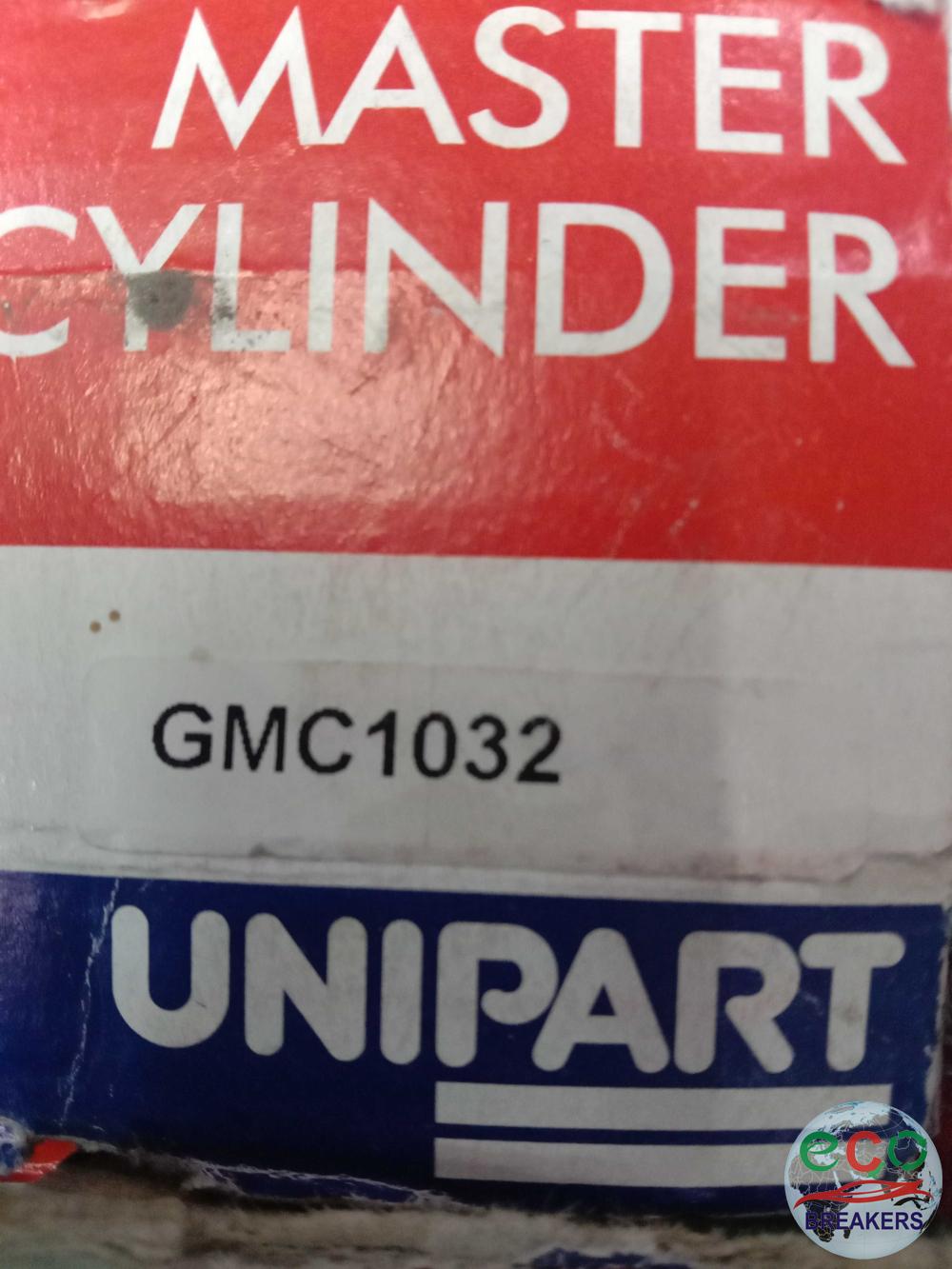
Always match the replacement to the part number or the exact vehicle, not just the look of the cylinder.
Inside the Clutch Slave (Release) Cylinder

Clutch slave cylinder cross-section
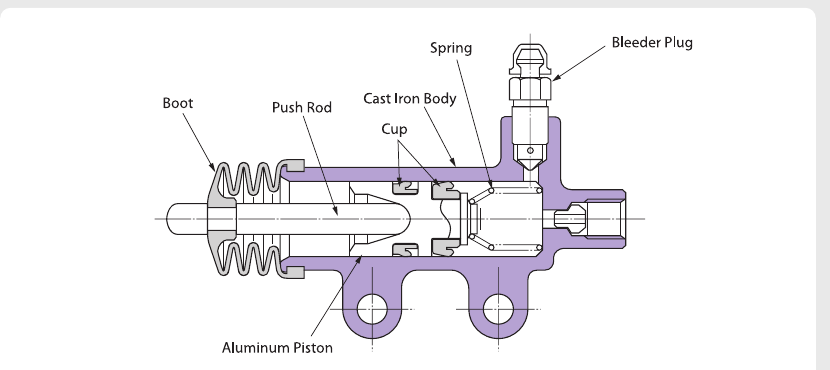
Cross-section of a clutch release (slave) cylinder: body, piston, cup, spring, push rod, boot and bleed nipple.

The slave cylinder is simpler: a body with a piston, a rubber cup seal, a light spring, a push rod and a bleed nipple, with a rubber boot over the open end. The boot keeps dirt, dust and water off the push rod and piston - once it splits, grit gets in and the seal soon starts to leak. When fluid pressure arrives from the master cylinder, the piston pushes the rod out against the clutch fork; when the pedal is released, the clutch's own spring pressure and the return spring push the rod back in and send the fluid back up the line.
Clutch release cylinder location
Where the release (slave) cylinder sits: on the gearbox bell housing, acting on the clutch release fork.

Signs of a Failing Clutch Master or Slave Cylinder

  • The pedal sinks to the floor or stays down - a worn seal is letting fluid bypass the piston.
  • A soft or spongy pedal - air in the system, often from a leak.
  • Fluid leaks - under the dashboard near the pedal (master cylinder), or around the slave cylinder's boot on the gearbox.
  • The clutch won't fully disengage - gears crunch because a low fluid level or a tired cylinder no longer moves the fork far enough. Insufficient fluid in the clutch hydraulics is one of the standard causes of a dragging clutch.
  • The fluid reservoir keeps dropping - clutch fluid is shared with the brakes on many cars, so a leak here matters twice.

Fitting a Replacement: The Rules That Matter

  • Keep everything clean - dirt, dust or grit inside the cylinder or reservoir damages the seals, causing leaks and poor pressure.
  • Use only the fluid the vehicle manufacturer specifies - mixing in fluids with mineral additives attacks the rubber seals and can cause clutch failure.
  • Tighten bolts, nuts and pipe unions to the manufacturer's torque settings - damaged threads cause leaks and poor operation.
  • After fitting a master cylinder, set the clutch pedal to the height and free play the manufacturer specifies - incorrect adjustment gives poor clutch engagement and release.
  • Handle the cylinders with care - they are precision parts. Never fit one that has been dropped or deformed; damaged internals may never produce the correct pressure.
  • Bleed the system thoroughly afterwards so no air is left in the line.
Replace in pairs? Master and slave cylinders age together. If one has failed on an older car, the other is often not far behind - replacing both at the same time, and refreshing the fluid, saves bleeding the system twice.

Technical diagrams and failure photos courtesy of AISIN, an original-equipment clutch manufacturer. Always follow the vehicle manufacturer's service manual and torque figures for your specific car.

In Stock Now

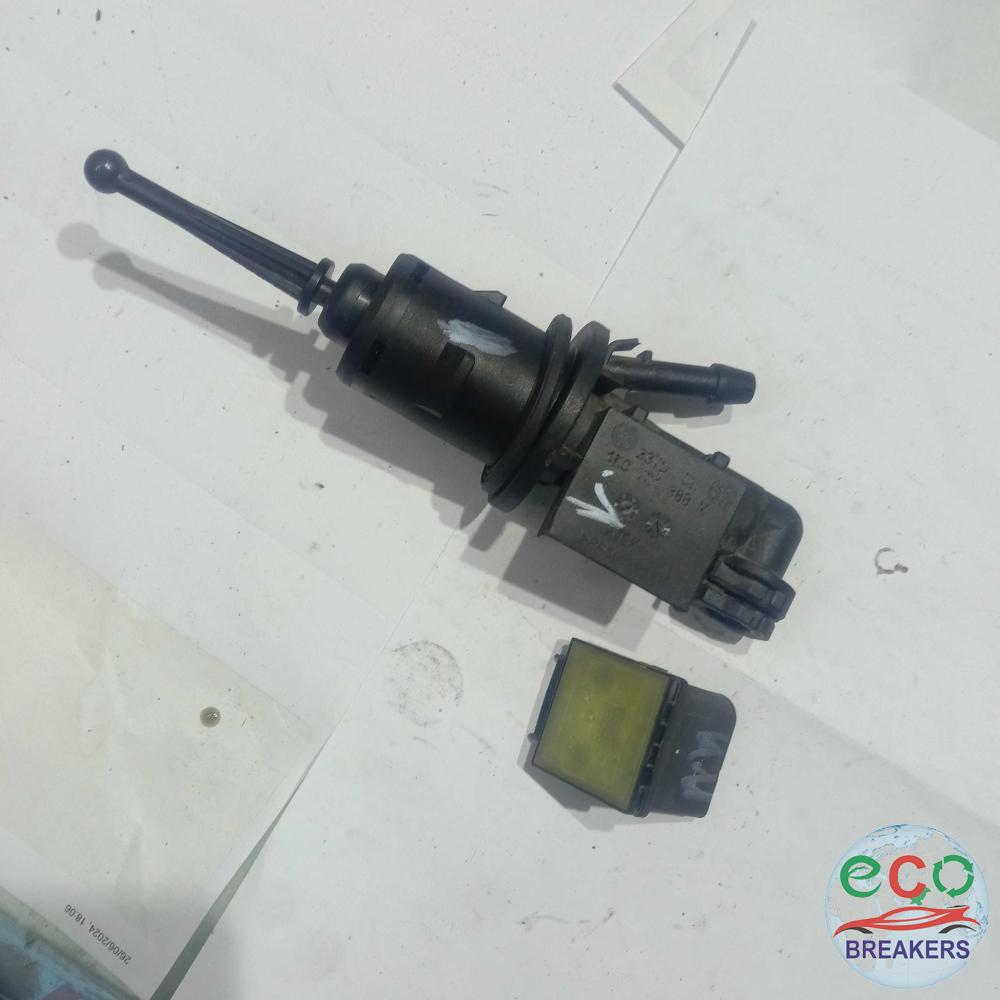
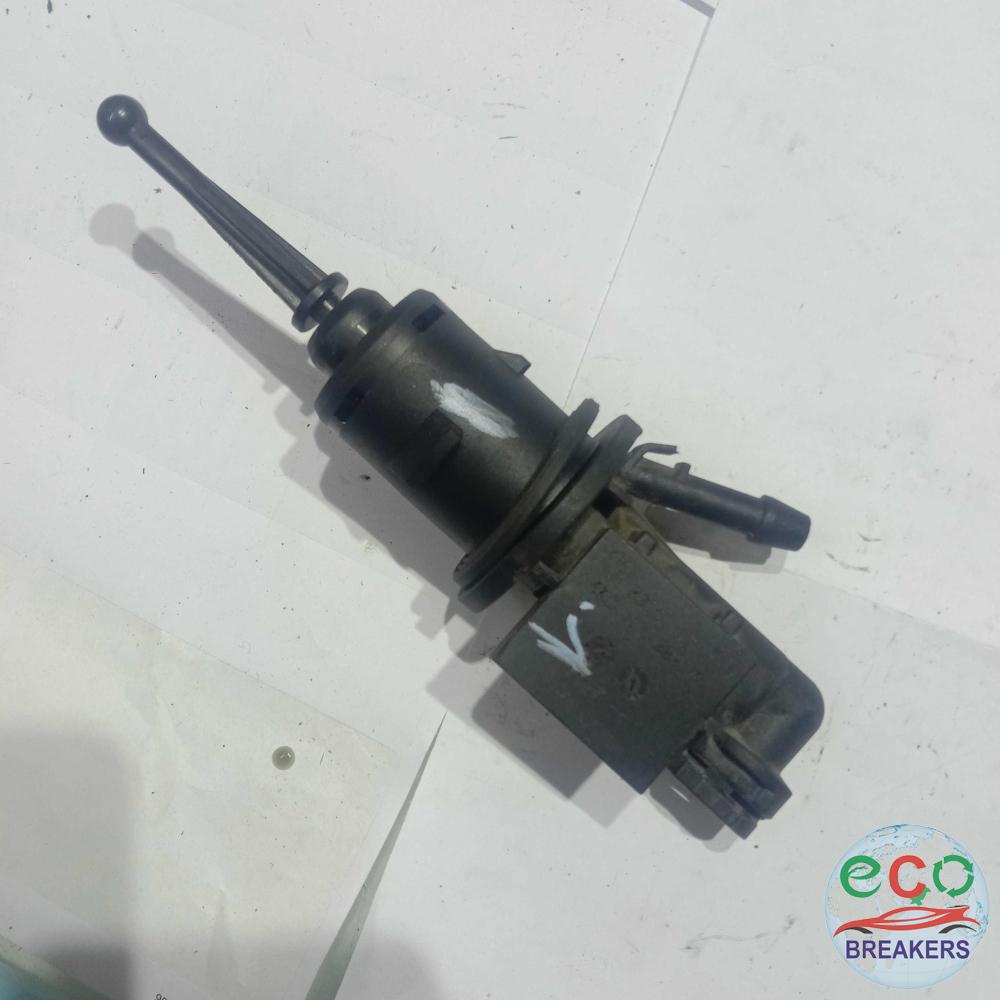
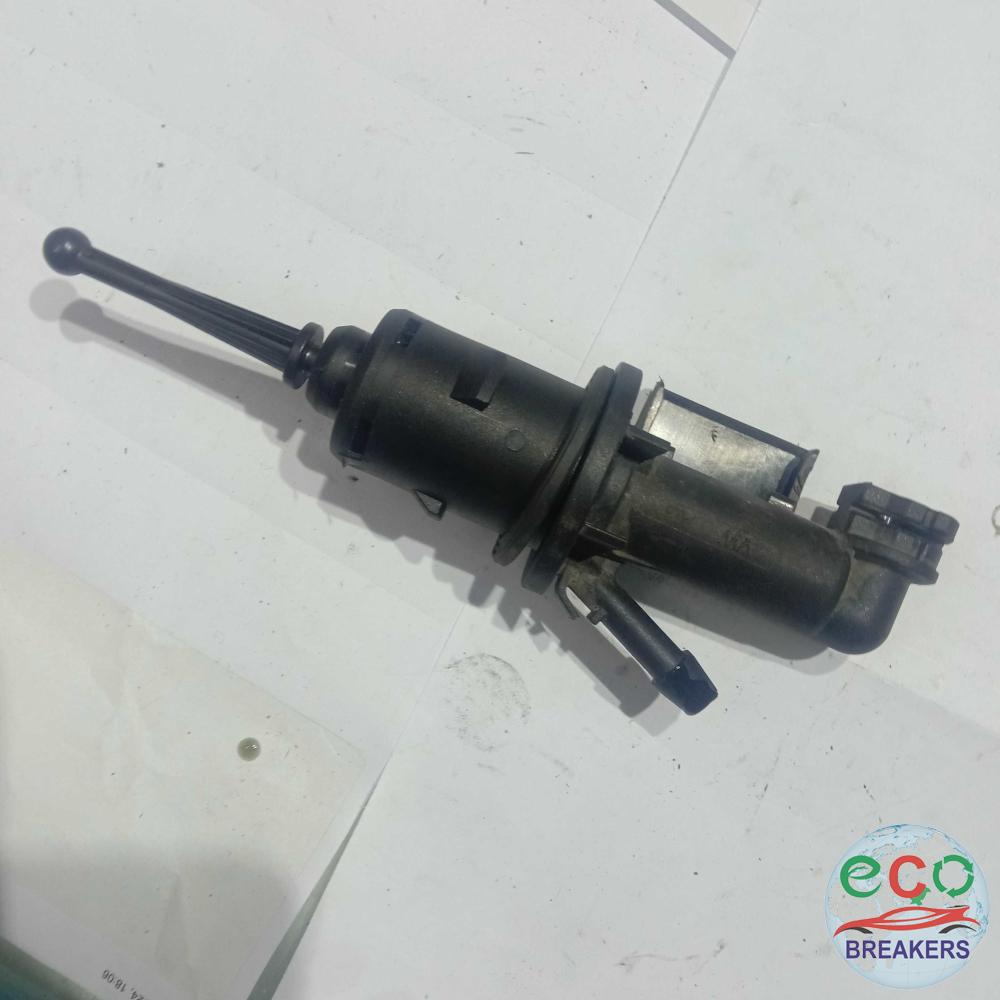
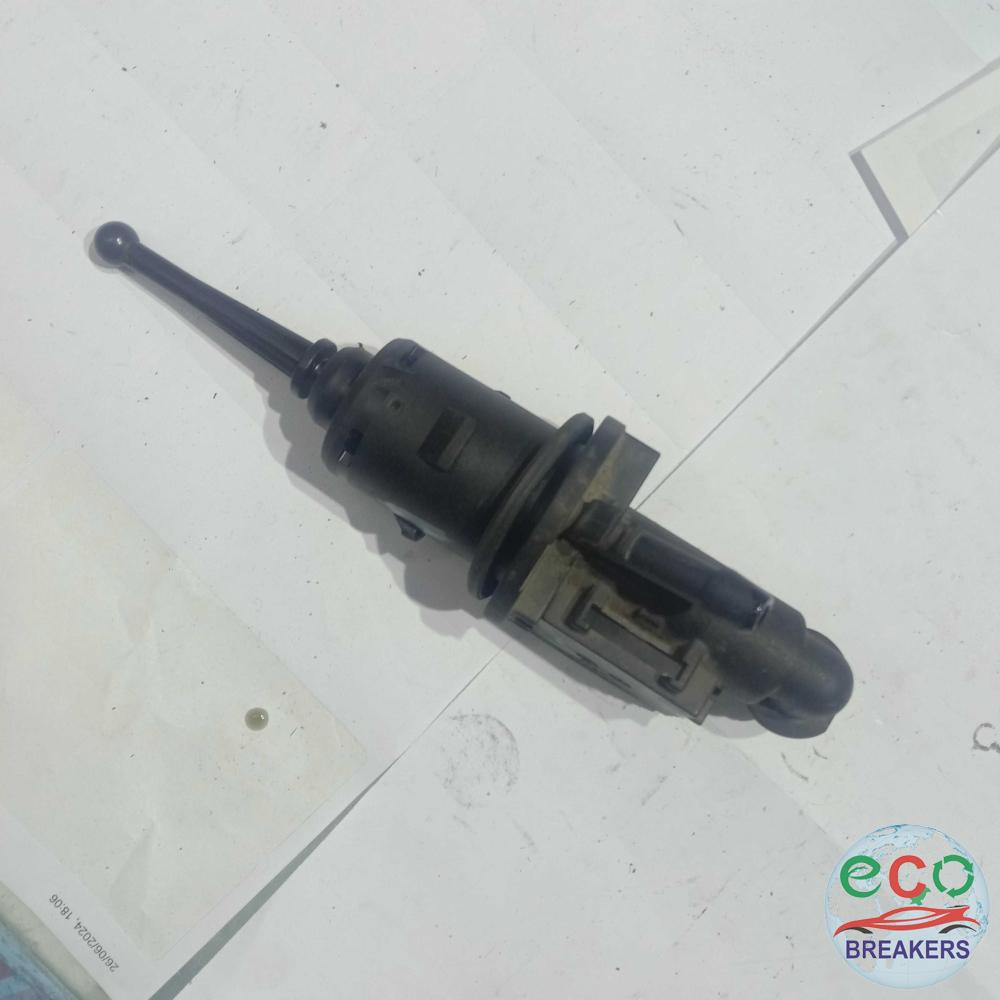
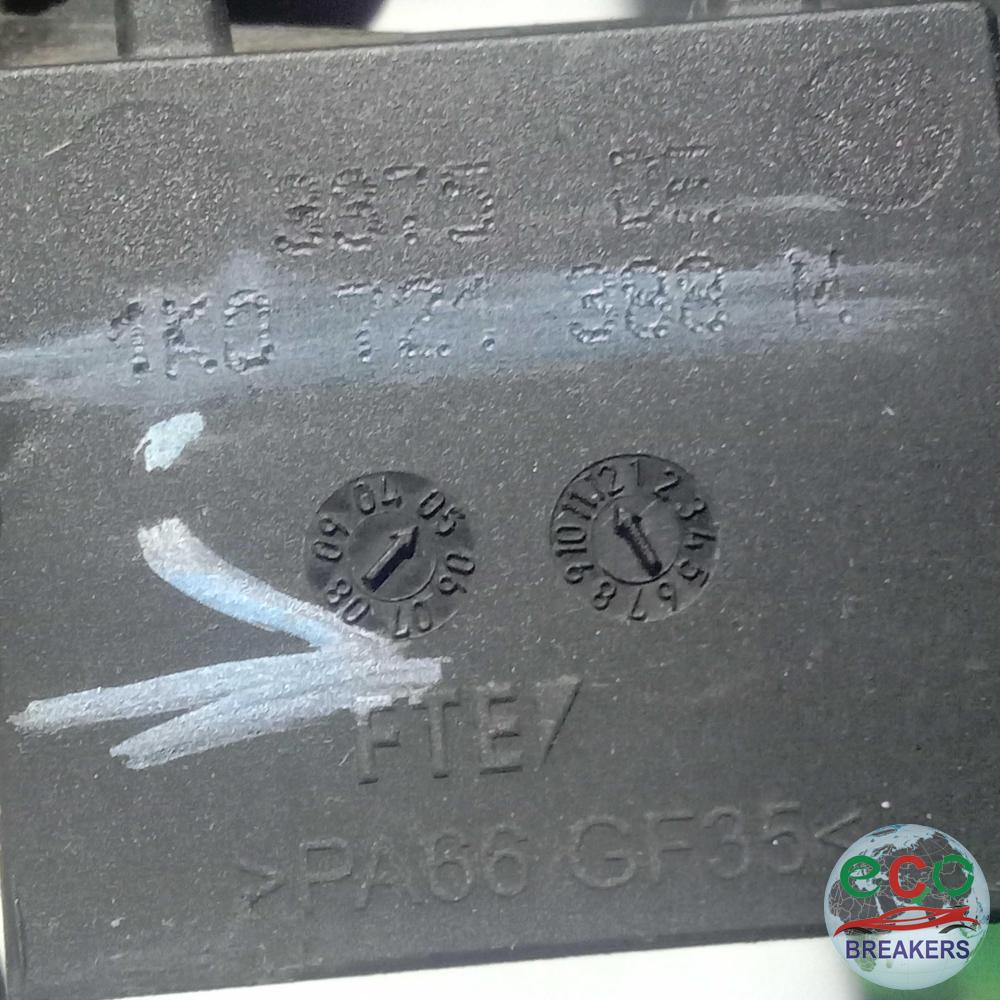
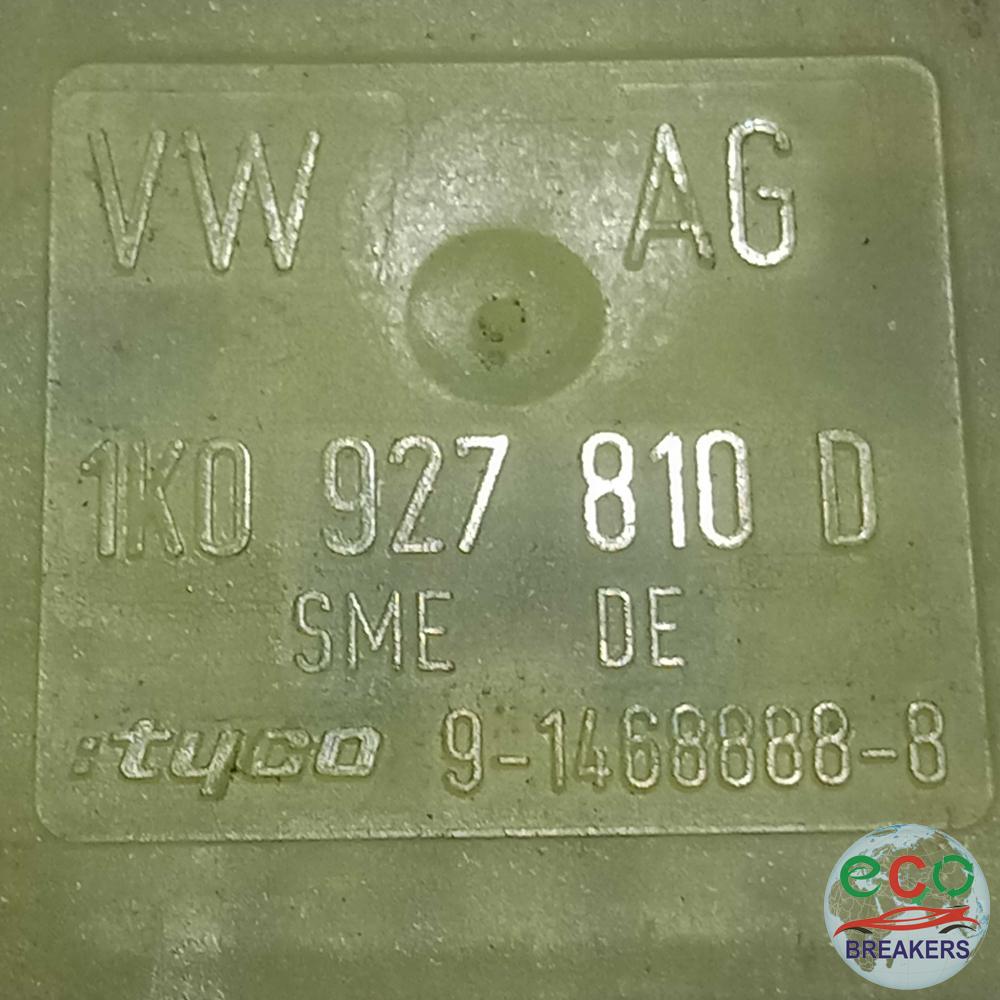
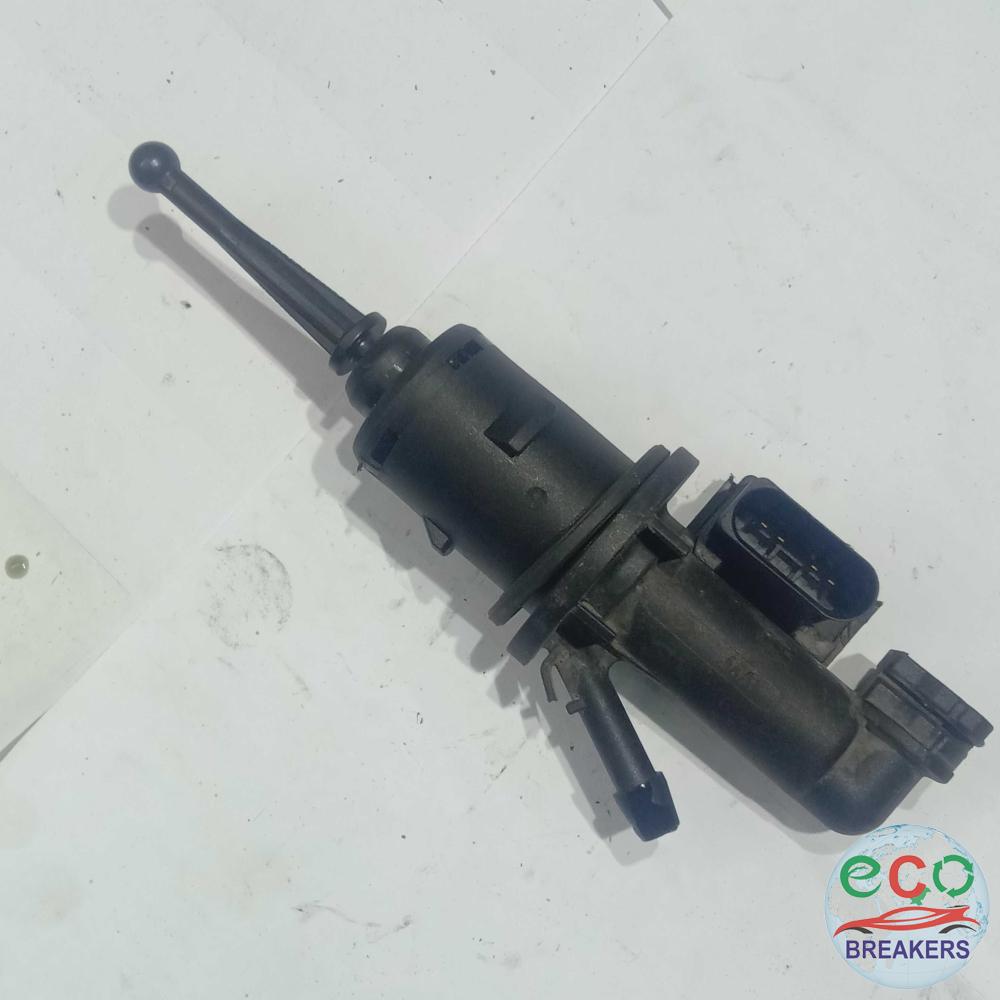
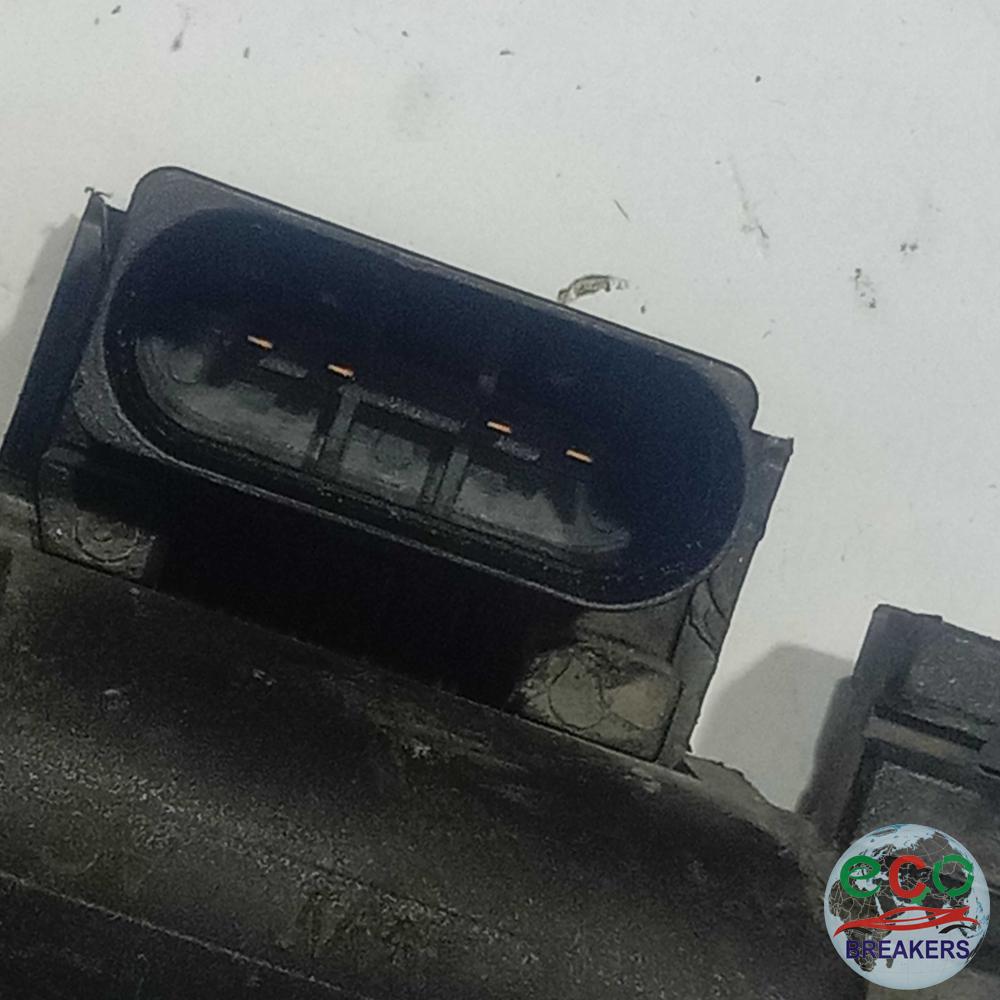
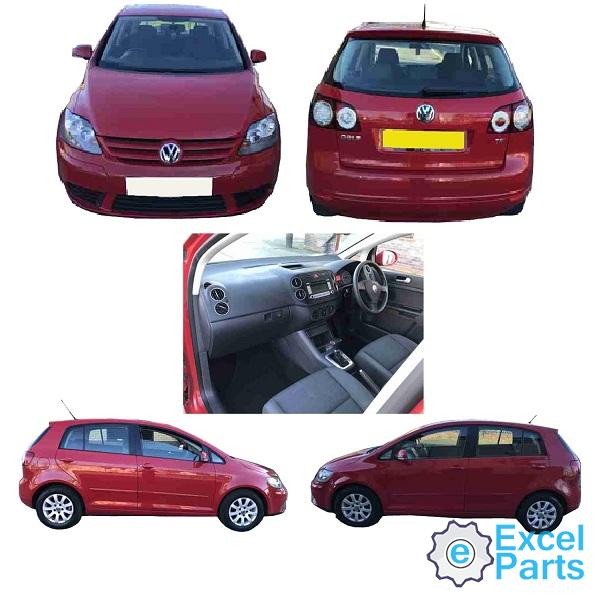
VW Golf MK5 1K A5 Clutch Master Cylinder 1.4 1390 cc Petrol CAXA 2006 - 2009

VW Golf MK5 1K A5 Clutch Master Cylinder 1.4 1390 cc Petrol CAXA 2006 - 2009

Part Number(s): 1K0927810D - click a part number above to view and buy this exact part.
Click Here To Buy This Part →

VW Golf MK5 1K A5 Clutch Slave Cylinder 1.4 1390 cc Petrol CAXA 2006 - 2009

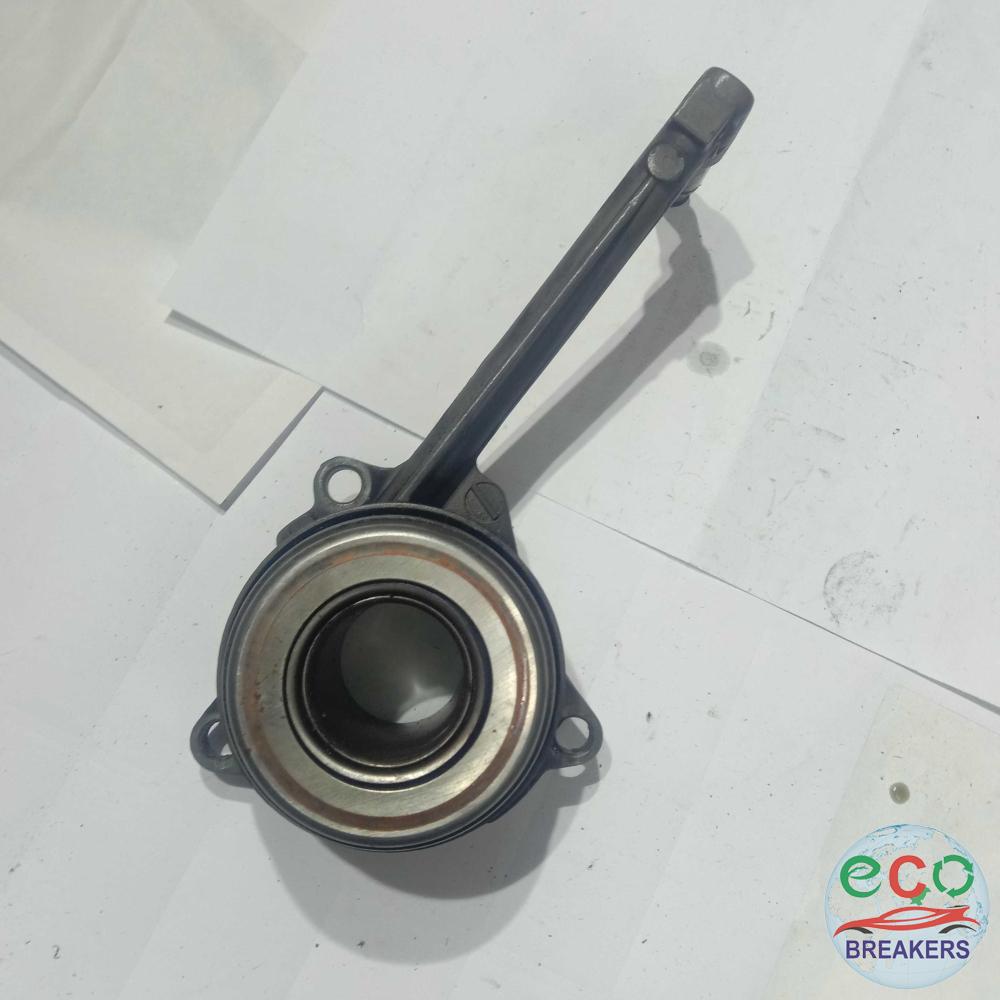
VW Golf MK5 1K A5 Clutch Slave Cylinder 1.4 1390 cc Petrol CAXA 2006 - 2009

Part Number(s): 645440015 - click a part number above to view and buy this exact part.

Click Here To Buy This Part →

Looking for a clutch part for a different car? Send us your registration and we'll check what we have.