How a Car Clutch Works: Clutch Disc, Pressure Plate and Clutch Types Explained
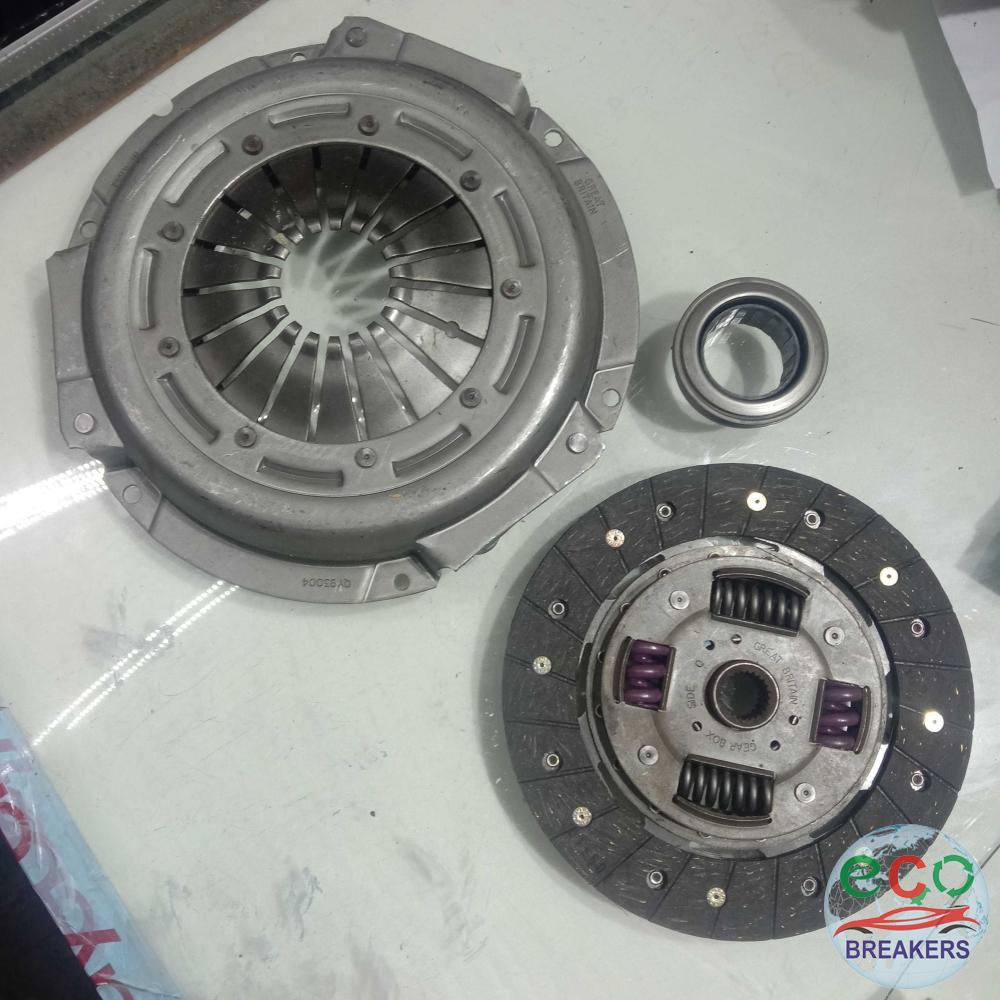
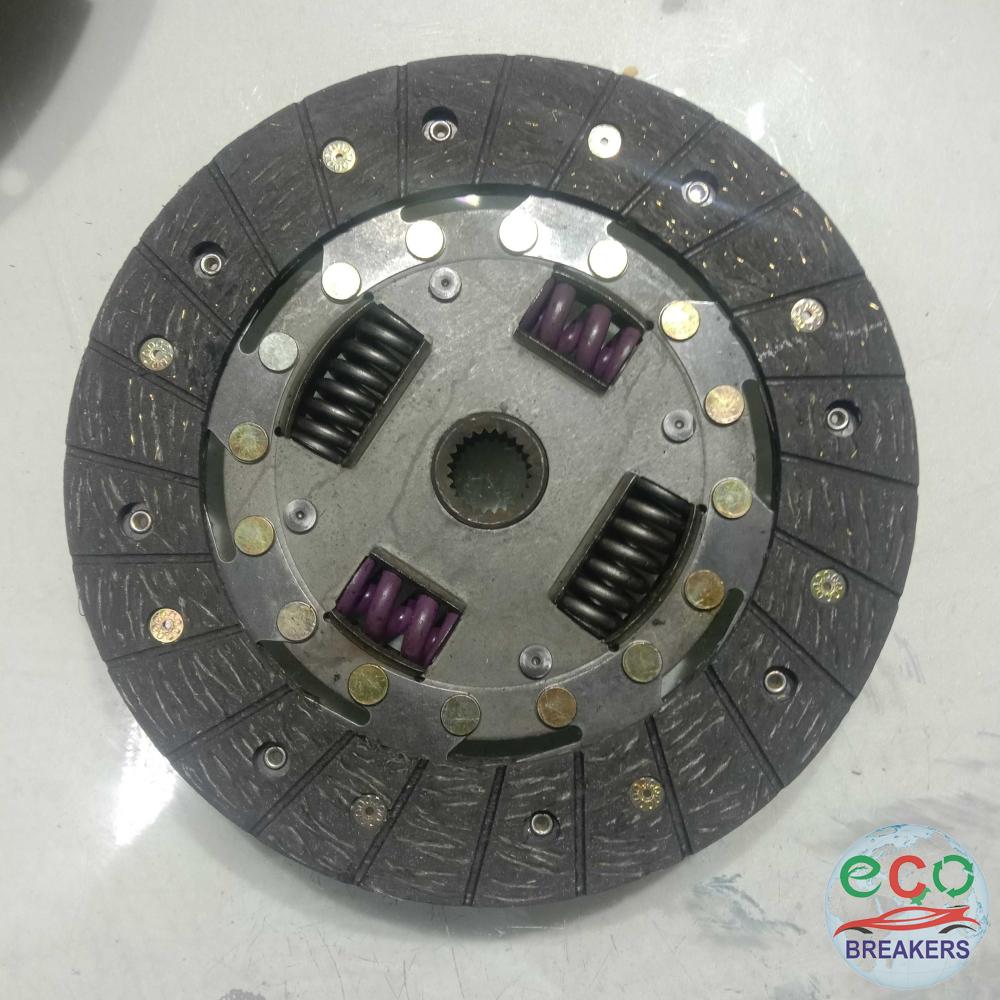
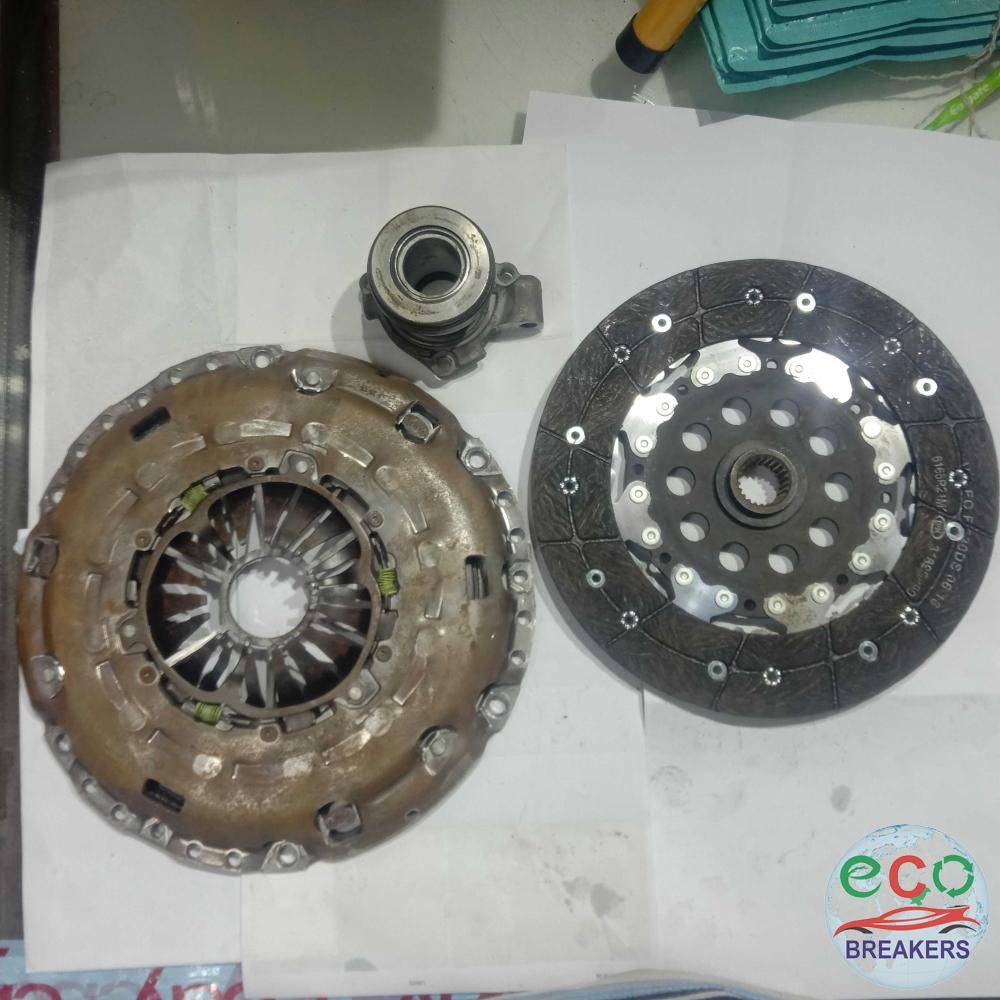
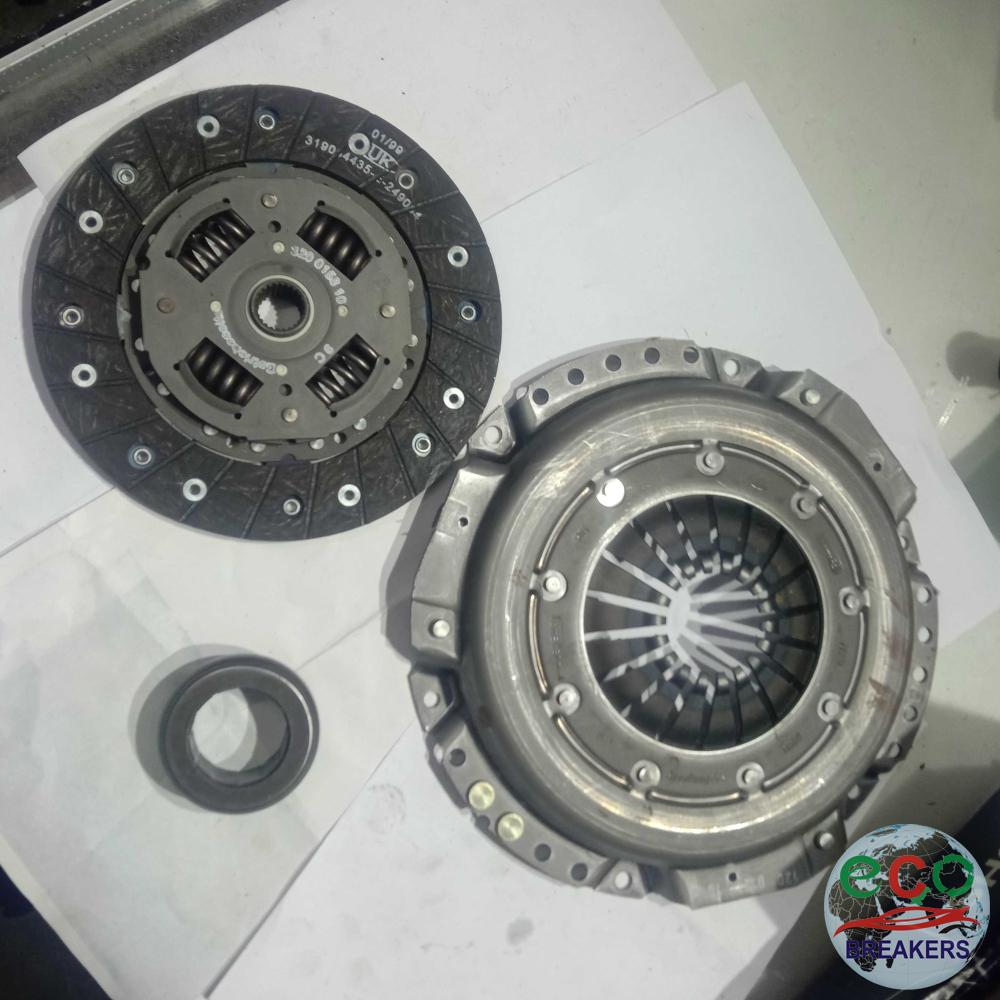
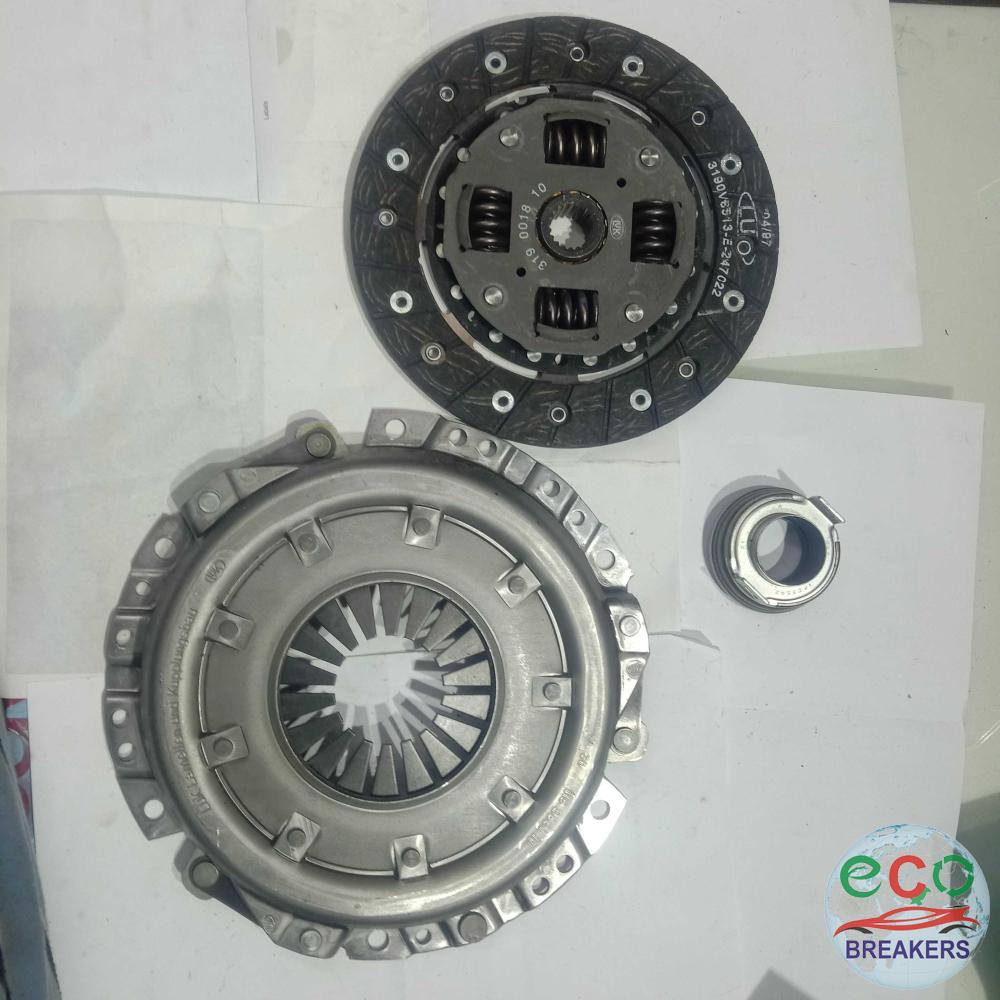
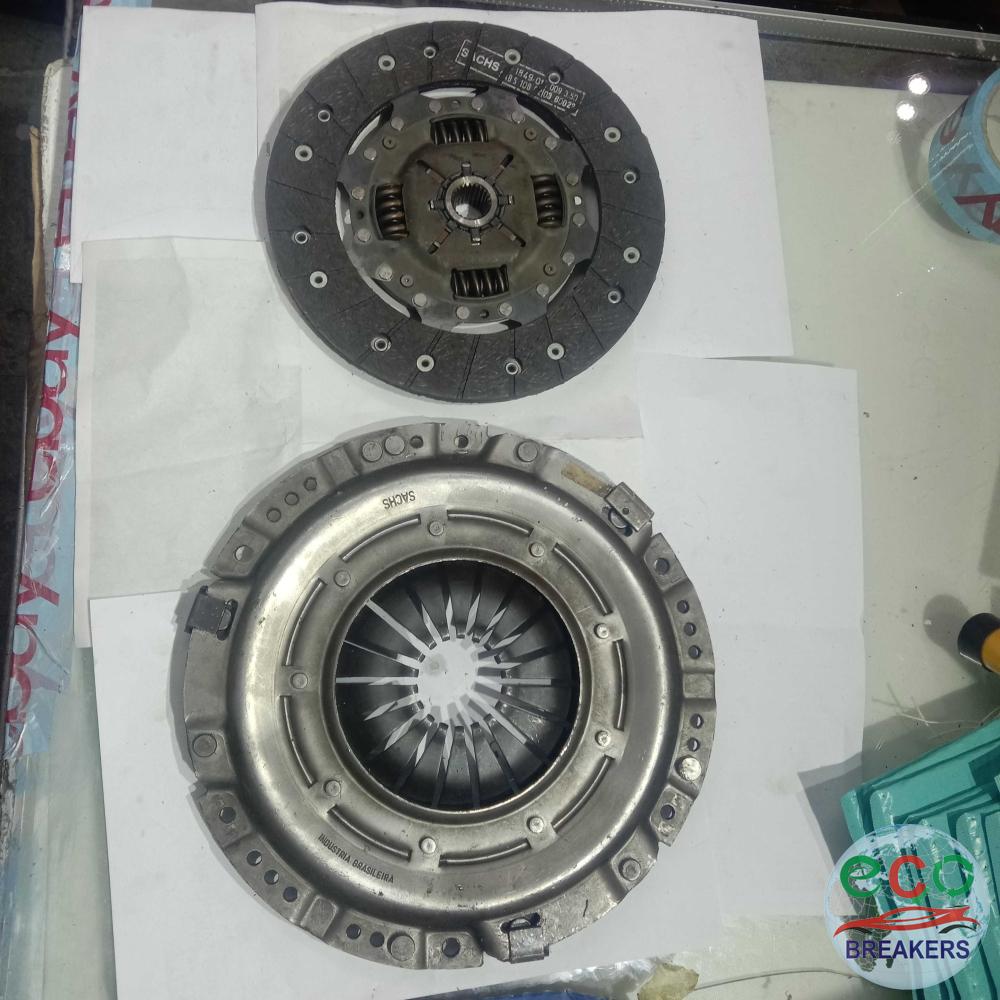
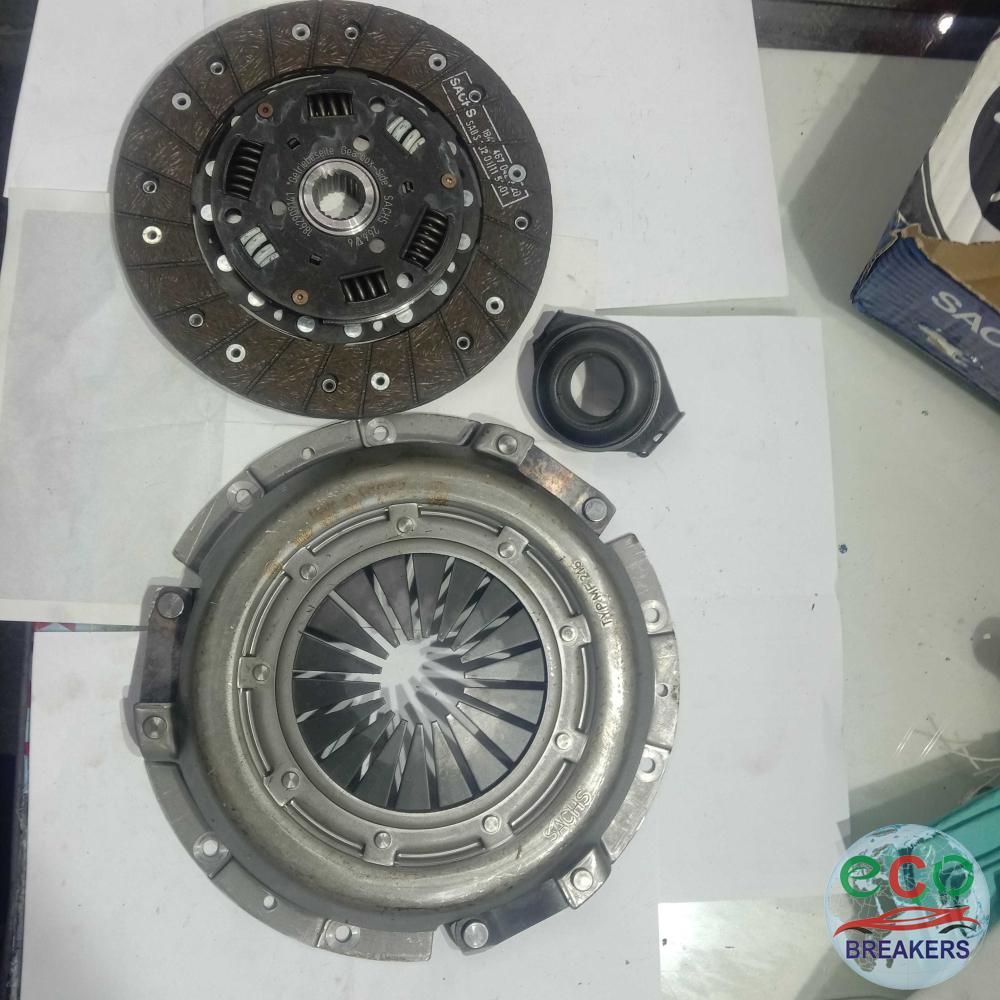
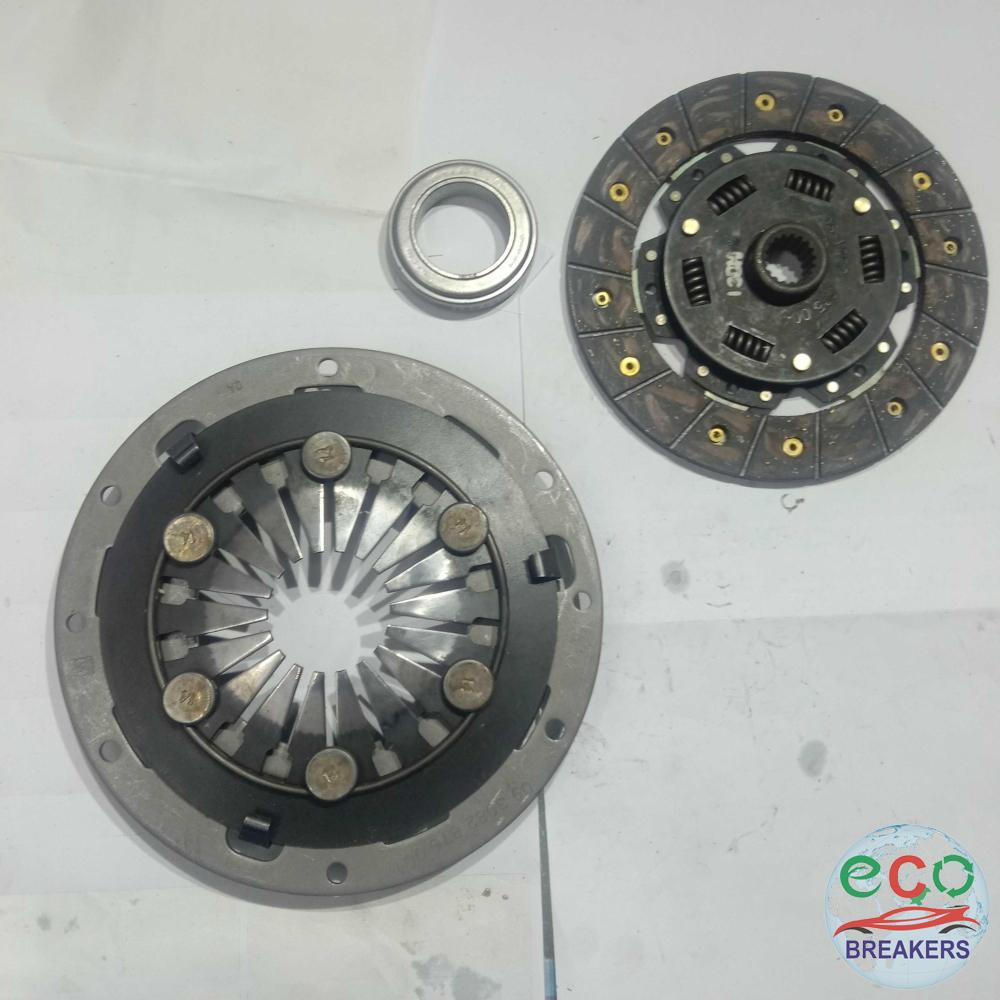
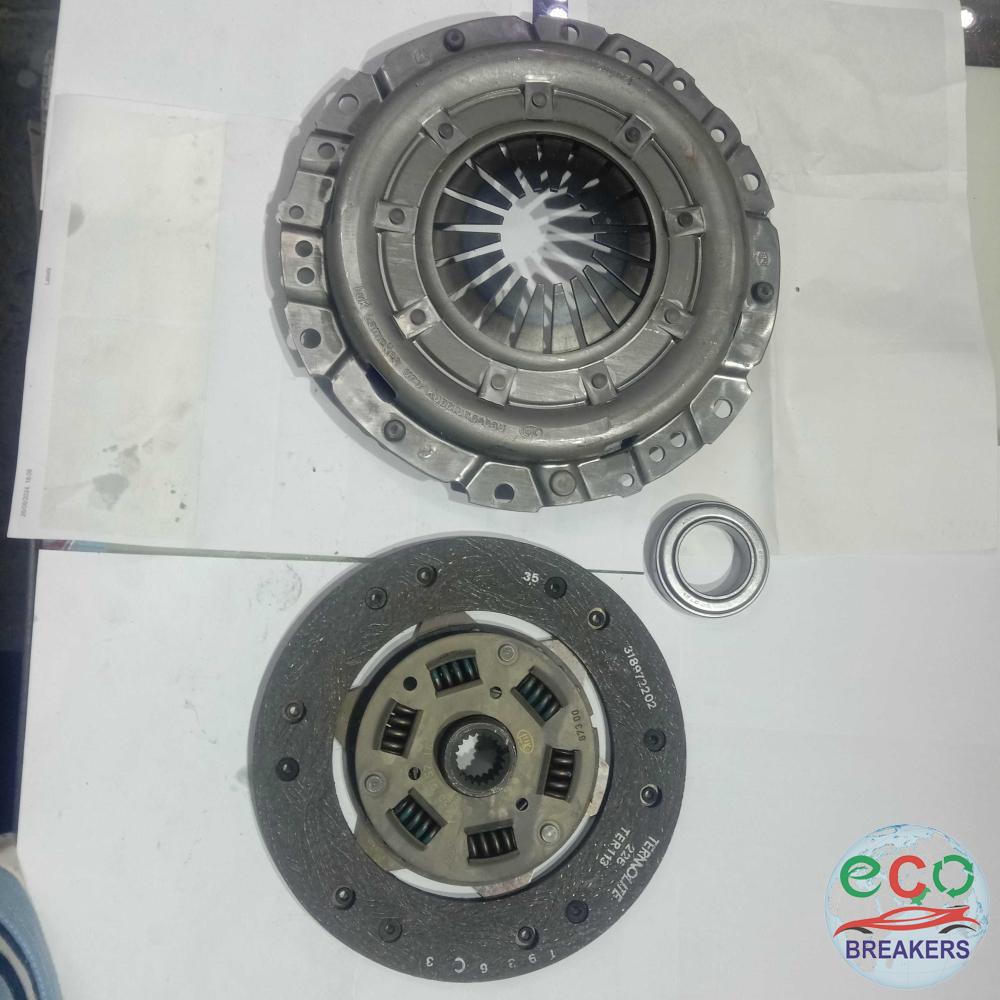
Clutch Kit 3 Pieces
Short Description
What is inside a clutch disc and clutch cover, how they work together, the different types of clutch fitted to petrol, diesel and 4x4 vehicles, and how modern clutches have improved.
Details
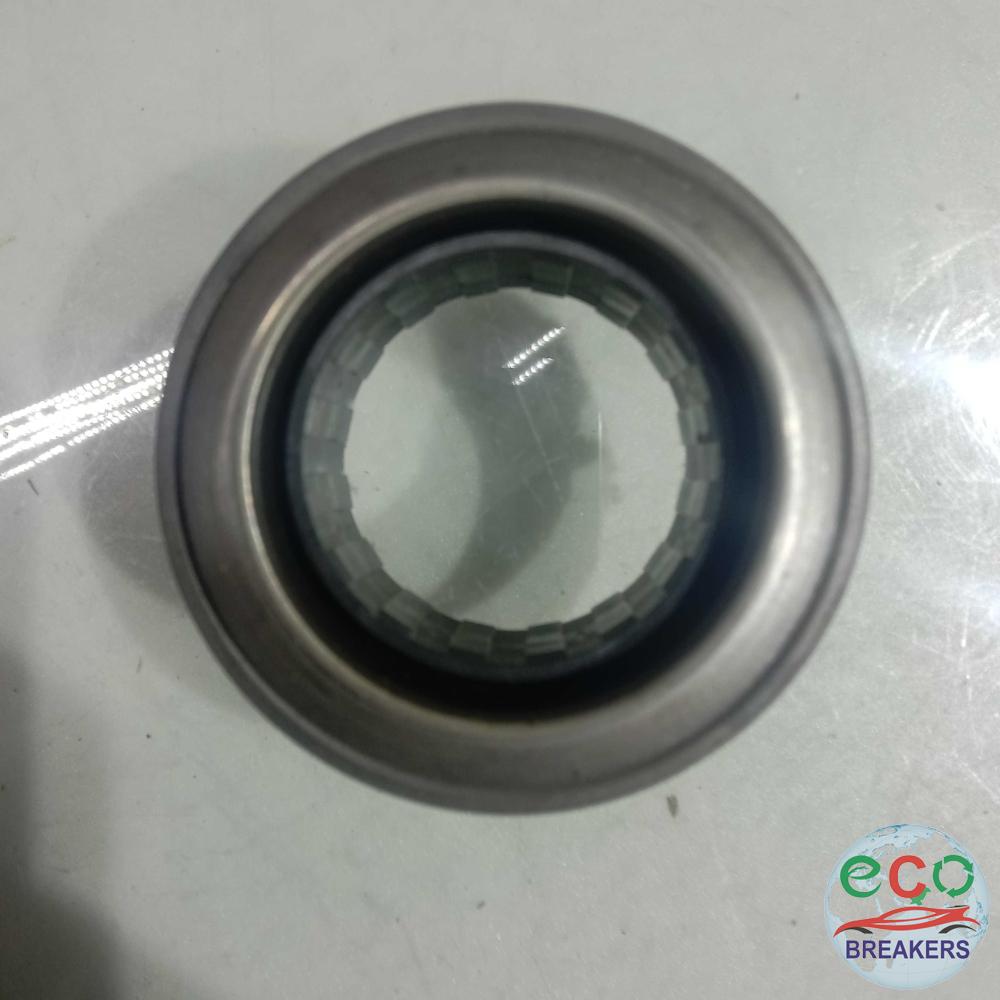
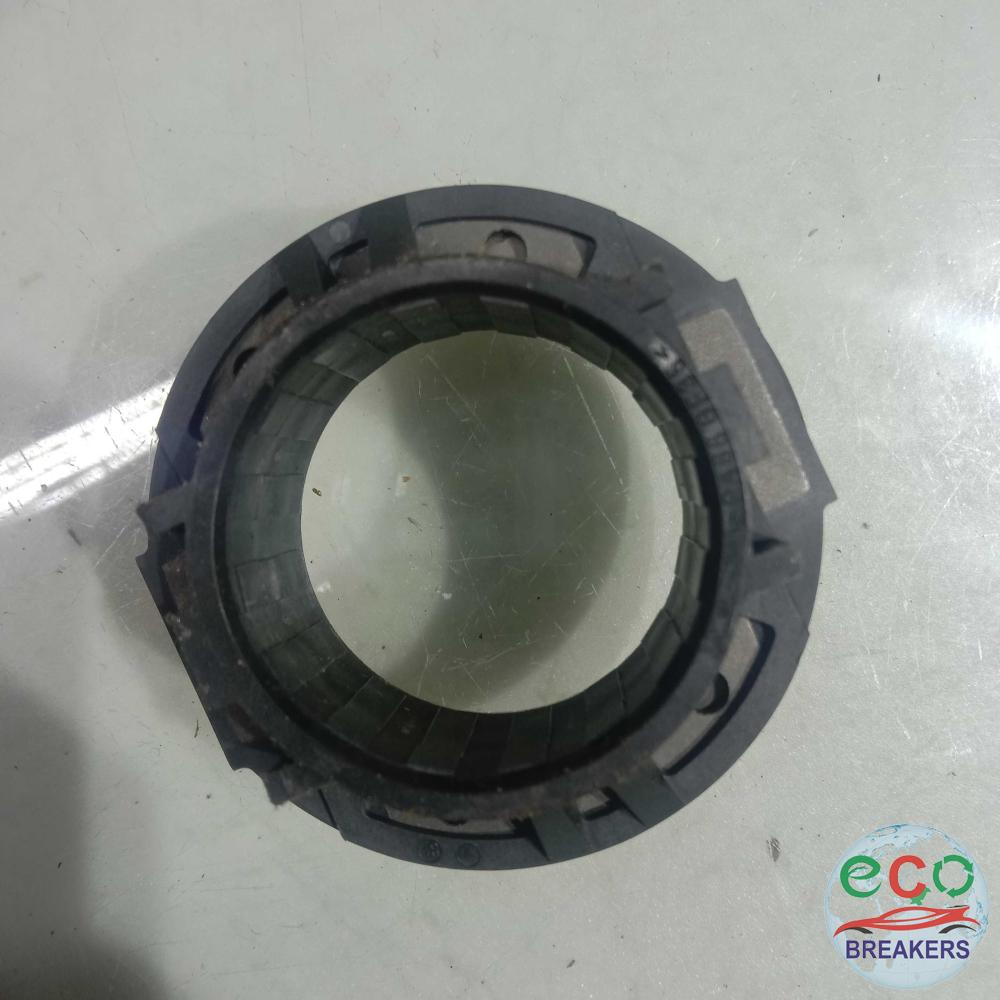
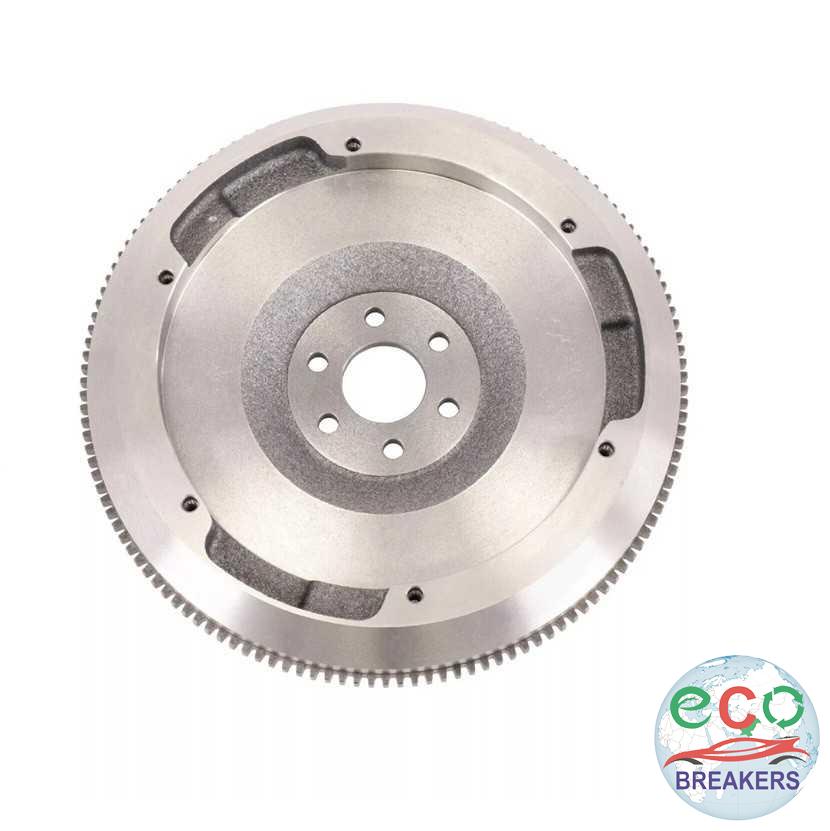
The clutch sits between the engine and the gearbox and has one job: to connect and disconnect the engine's power smoothly. It does that with three main parts clamped together - the flywheel bolted to the engine's crankshaft, the clutch disc in the middle, and the clutch cover (pressure plate) bolted to the flywheel. Press the pedal and the release bearing pushes on the cover's diaphragm spring, the pressure plate lifts away, and the disc spins free. Let the pedal up and the spring clamps the disc between the pressure plate and flywheel, so the engine drives the gearbox.
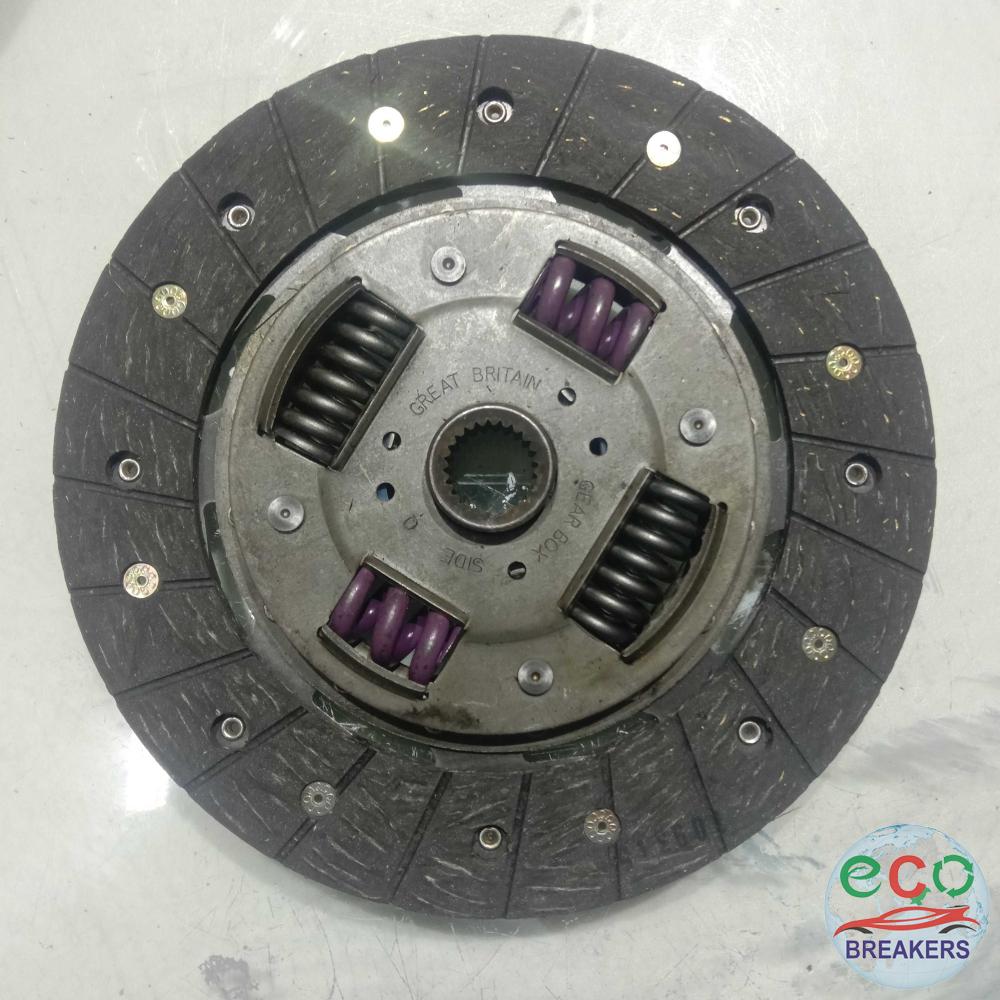
Inside the Clutch Disc
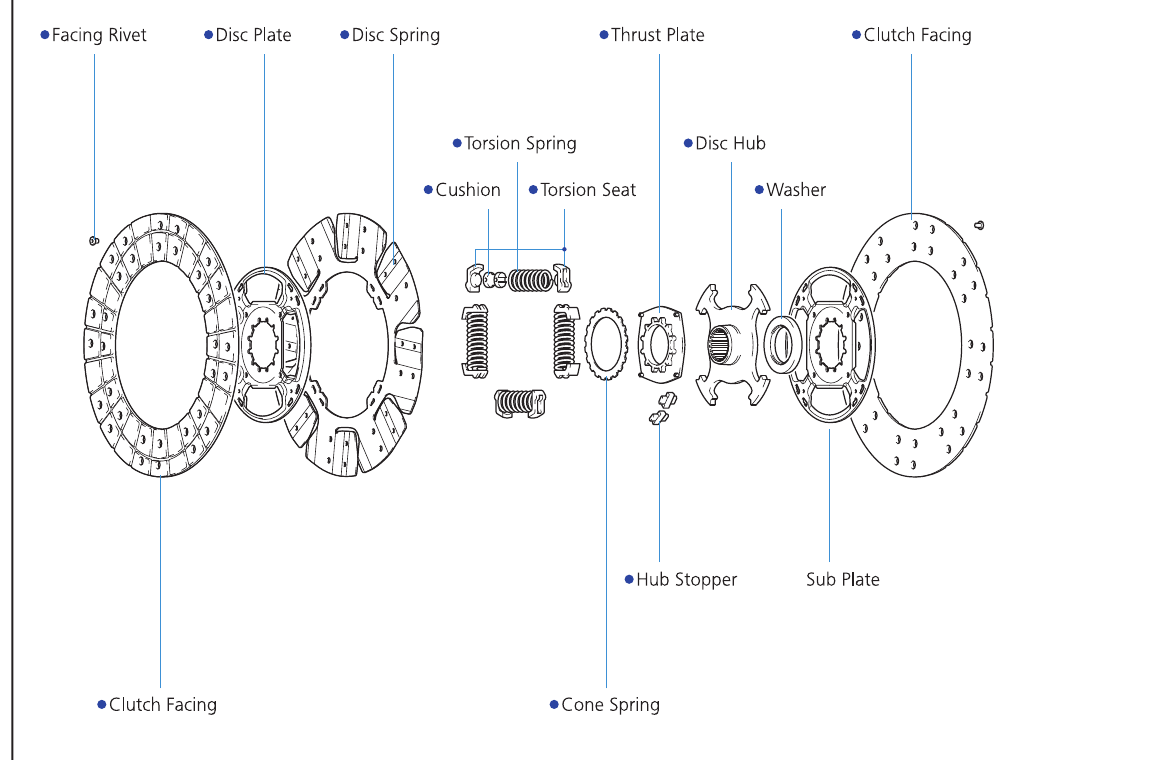
Exploded view of a clutch disc assembly, showing every component.
A clutch disc is far more than a friction plate. Working from the outside in:
Clutch facings - the friction material on each side, fixed with facing rivets. These are what wear out.
Disc springs (cushion segments) - wavy spring steel between the two facings that lets the clutch take up drive progressively instead of snatching.
Disc plate and sub plate - the two steel plates that carry the facings and sandwich the damper.
Torsion springs, seats and cushions - the coil springs set around the centre. They let the hub twist slightly against the plates, soaking up engine pulses and drivetrain shocks. This torsional damper is what stops gear rattle and harsh take-up.
Disc hub - the splined centre that slides along the gearbox input shaft, with a thrust plate, cone spring, washer and hub stoppers controlling how the damper moves.
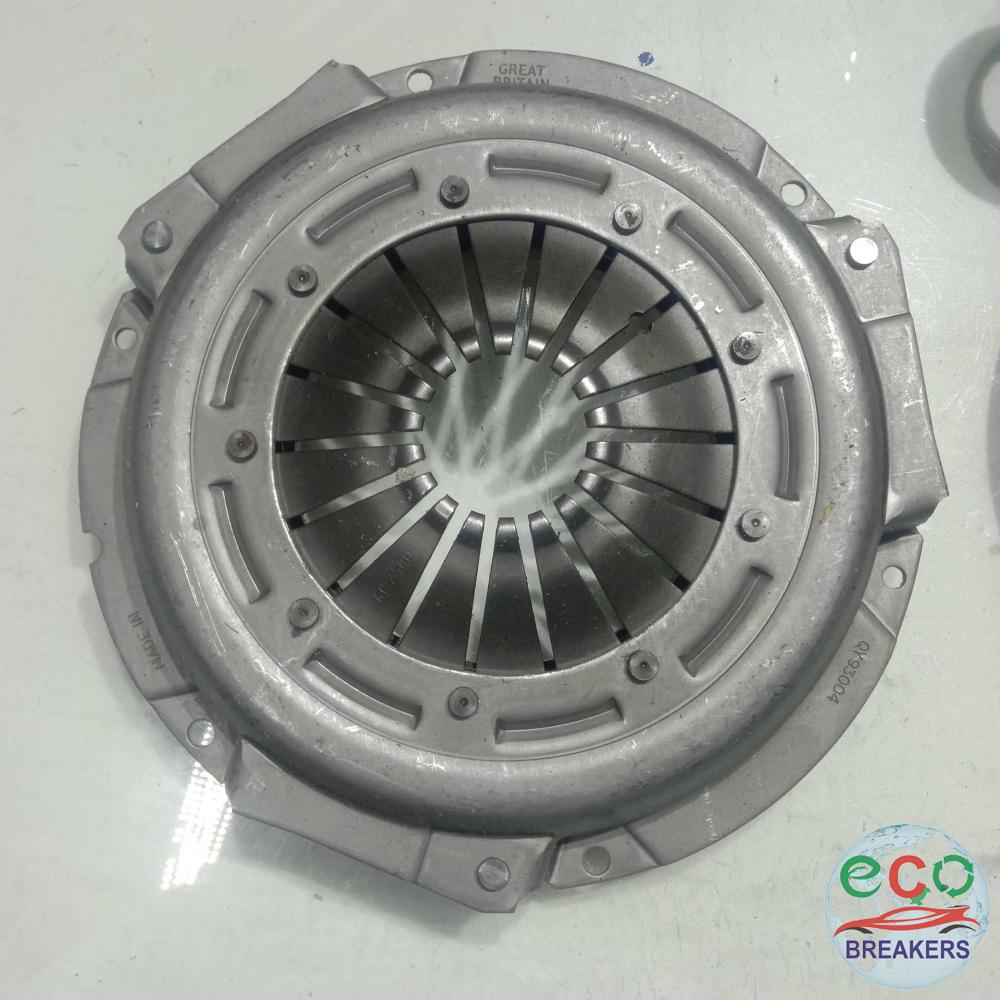
Inside the Clutch Cover (Pressure Plate)
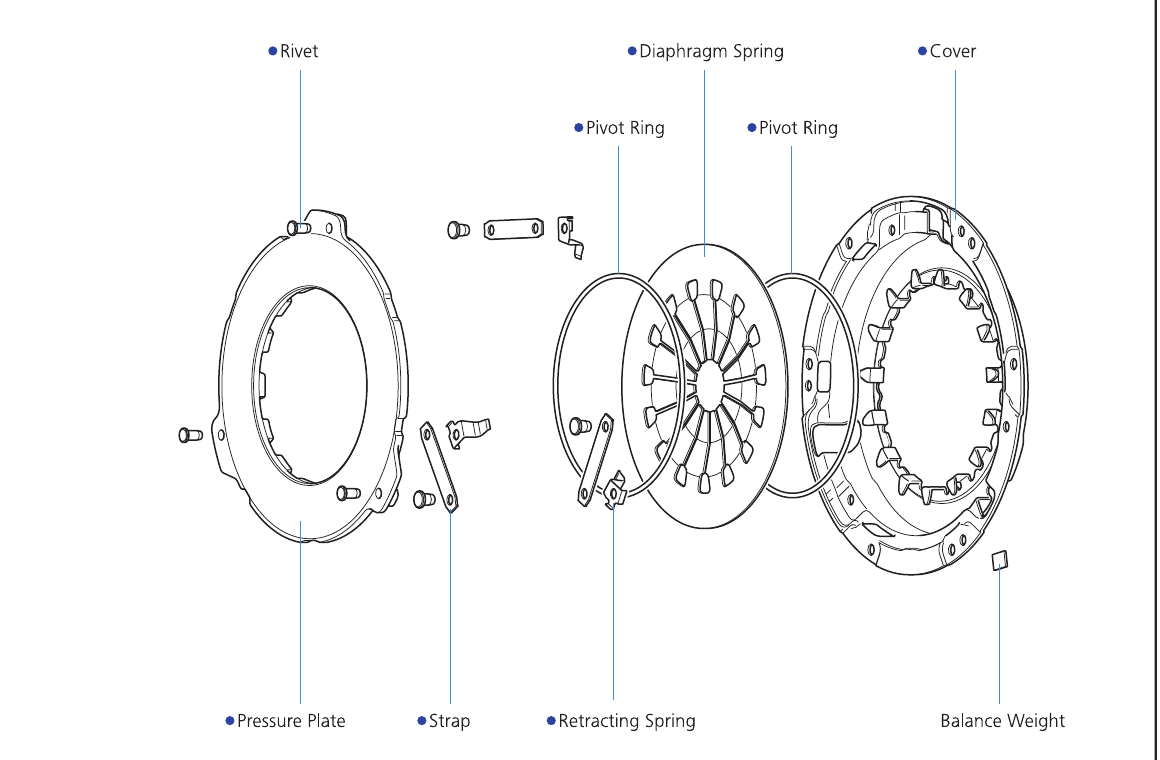
Exploded view of a clutch cover assembly: pressure plate, straps, diaphragm spring, pivot rings and cover.
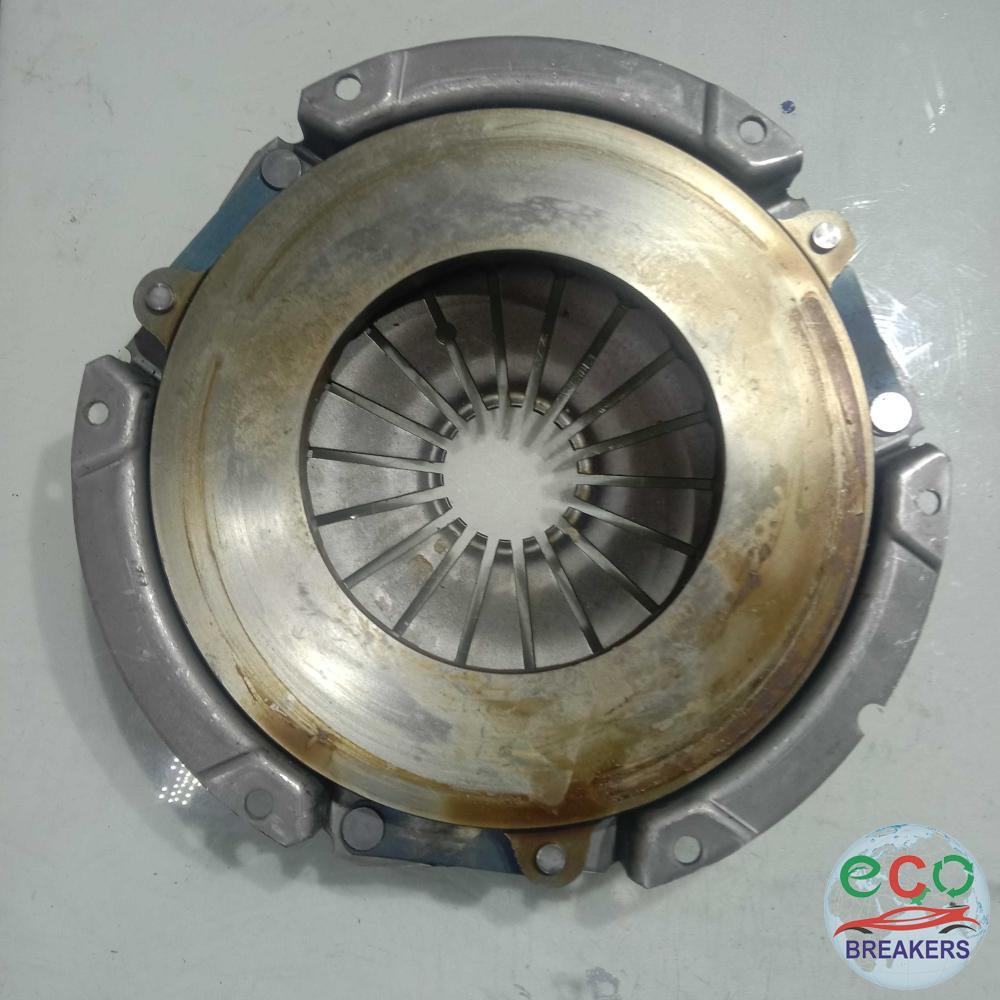
Pressure plate - the heavy cast-iron ring that clamps the disc against the flywheel.
Diaphragm spring - a single dished spring with fingers towards the centre. The release bearing pushes on the fingers, and the spring pivots on the pivot rings to lift the pressure plate.
Straps and retracting springs - thin steel straps that connect the pressure plate to the cover and pull it back cleanly when the clutch is released. They are easily bent if a cover is dropped, which is why a dropped clutch cover should never be fitted.
Cover and balance weights - the pressed-steel housing bolted to the flywheel, balanced so it spins smoothly at high revs.
Clutch discs are designed around the engine and drivetrain they are fitted to:
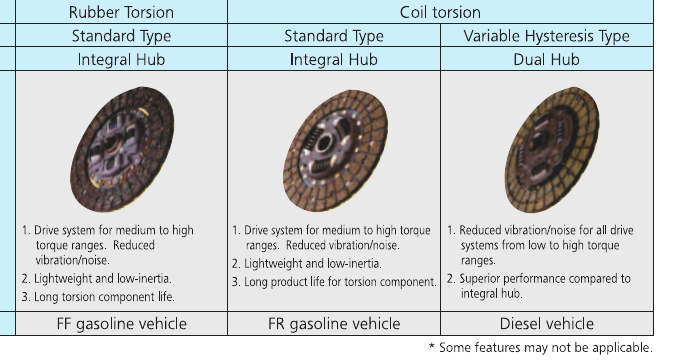
Rubber-torsion discs - lightweight, low inertia and quiet, typical of front-engine, front-wheel-drive petrol cars.
Coil-torsion discs - for medium to high torque, typical of front-engine, rear-wheel-drive petrol vehicles.
Dual-hub, variable-hysteresis discs - designed to damp vibration across the whole torque range, typical of diesel engines, whose strong pulses are harder on a clutch.
Clutch covers vary too. Most cars and light vans use a diaphragm spring, push-type cover - light, compact and long lasting. Some high-output performance cars use a pull-type cover, which gives a lighter pedal and more efficient release. Small and medium trucks, especially diesels, may use a coil-spring cover, which is robust and easy to replace.
Modern Clutches: Why a New One Might Look Different
Clutch makers have been replacing older cover designs - the diaphragm-spring-turnover and riveted types - with newer low-noise, low-vibration designs (often called NVR, for "noise vibration reduction"). Many original-equipment clutches have already changed over, so a replacement clutch can look noticeably different from the one that comes out of your car. That is normal: the mounting points, the release bearing position and the pressure plate's inner diameter are the same, so the fit is identical. What changes is the design:
a larger pressure plate friction area, which gets rid of heat better;
a curved diaphragm spring for smoother, more controllable engagement and release;
enclosed straps and levers, making the cover stiffer and spreading the clamping force more evenly;
fewer but thicker, stronger diaphragm spring fingers;
on the disc, springs moved further out to the edge, spring stoppers and retainers on the damper seats, and larger springs - for a smoother ride, less wear and a wider torque range.
The practical result is a quieter, smoother clutch with a lighter pedal feel and longer life - and it is also why one modern clutch part number often now covers several older ones.
Fitting a Clutch Properly
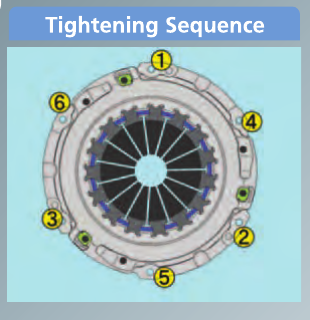
Tighten clutch cover bolts in a diagonal (star) sequence, 1 to 6, with a torque wrench.
Clean the gearbox input shaft and apply a thin coat of grease to the input shaft and the disc splines - then wipe off any excess. Too much grease ends up on the facings and causes slip and judder.
Use the clutch alignment tool to centre the disc before tightening the cover, so the gearbox input shaft slides in without forcing it.
Tighten the cover bolts gradually in a diagonal (star) pattern with a torque wrench, to the vehicle maker's figure, using the specified bolts. Never tighten them in one go or with an impact gun - that distorts the cover and causes drag or judder.
Check the diaphragm spring fingers are level - within about 0.5 mm (0.02 in) of each other.
Never fit a clutch that has been dropped, or that has got wet or oily. Keep the facings spotless.
Refit the gearbox squarely, supported, so it never hangs on the disc.
Storing clutches: even in the box, clutches can be damaged. Don't stack more than four clutch boxes on top of each other, and keep the largest boxes at the bottom.
Technical diagrams and failure photos courtesy of AISIN, an original-equipment clutch manufacturer. Always follow the vehicle manufacturer's service manual and torque figures for your specific car.
In Stock Now
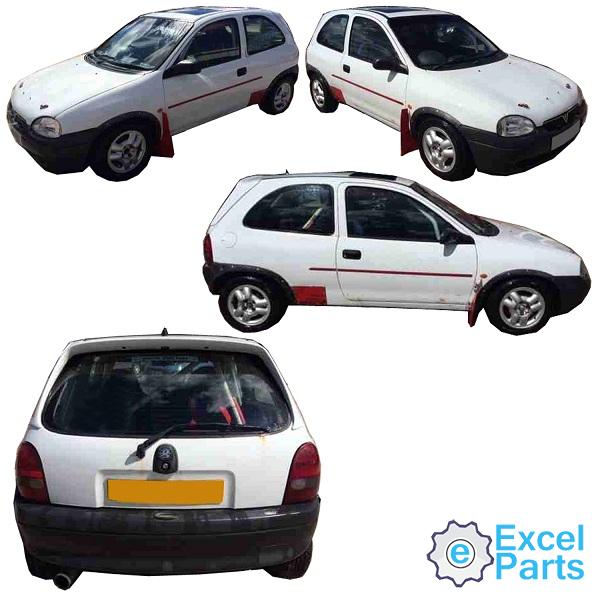
Vauxhall Corsa B MK1 73V40 Clutch Kit 3 Pieces 1.4 1389 cc Petrol X14XE 1994 - 2000 5 MTM 3 Door Hatchback
Part Number(s): 91126383, R1020004 - click a part number above to view and buy this exact part.