Engine Oil Pump: How It Works, Signs of Failure and How to Fit a Replacement
Oil Pump
Short Description
What the engine oil pump does, the different ways it is driven, how its rotors and pressure relief valve work, the warning signs of a failing pump, and the steps for fitting a new one.
Details
The oil pump is the heart of an engine's lubrication system. Every time the engine turns, it draws oil from the sump and pushes it under pressure to the crankshaft bearings, the pistons, the camshafts and the valve gear. On many modern engines it also supplies the oil pressure that operates hydraulic valve lifters and variable valve timing. When it fails, the damage is fast and expensive - which is why a flickering oil pressure light should never be ignored.
How the Oil Pump Works
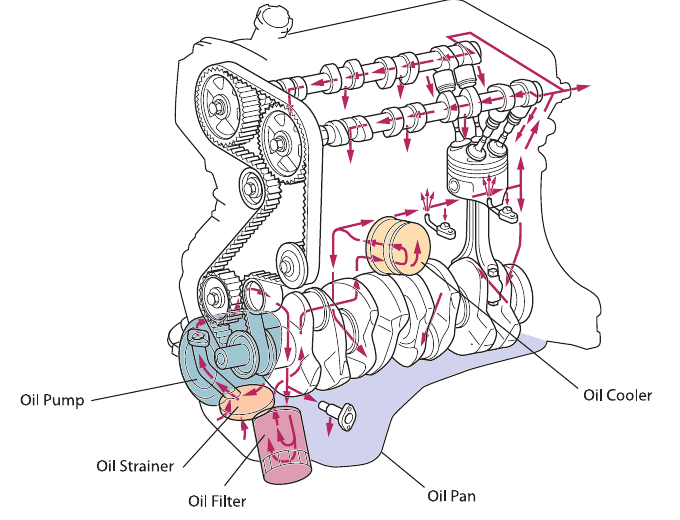
The oil circuit: sump and strainer, oil pump, filter, oil cooler, then the crankshaft, pistons and valve gear, draining back to the sump.
The pump is driven by the crankshaft. As it turns, it creates suction that draws oil from the sump through a strainer, a coarse mesh that stops larger debris reaching the pump. The pump then pushes that oil under pressure through the oil filter and, on some engines, an oil cooler, before it is fed to the bearings and moving parts. The oil cools, cleans and lubricates everything it passes over, then drains back down into the sump to go round again.
Different Ways an Oil Pump Is Driven
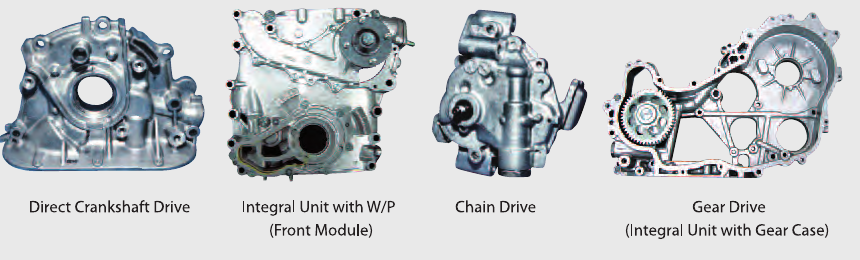
Four common oil pump drive layouts: direct crankshaft drive, integral unit with the water pump (front module), chain drive, and gear drive built into the gear case.
Direct crankshaft drive - the pump sits at the front of the engine and its inner rotor fits straight over the crankshaft nose.
Integral with the water pump (front module) - the oil pump, water pump and timing cover are one assembly.
Chain drive - a separate pump, usually low in the sump, driven by its own chain from the crankshaft.
Gear drive - driven by gears, built into a gear case.
The drive type decides where the pump is and how much work it is to change - a chain-driven pump in the sump is a very different job from a front-mounted crankshaft-driven one.
Inside the Pump: Rotors and the Relief Valve
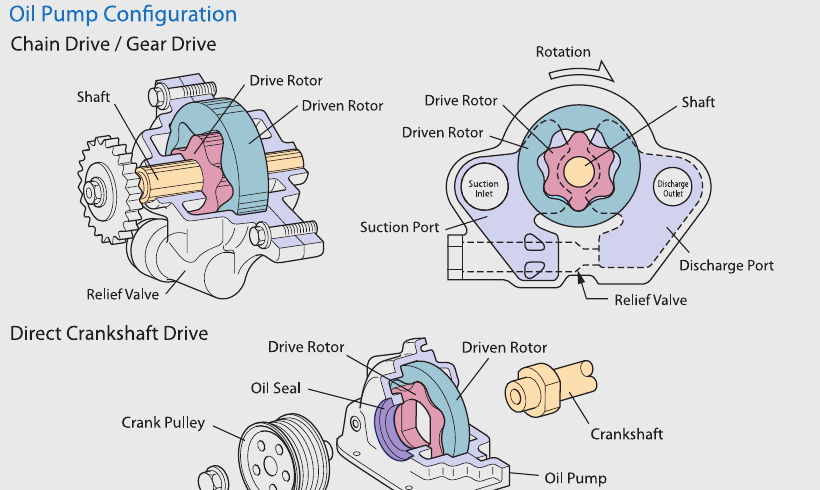
Inside a rotor-type oil pump: the drive rotor turns inside the driven rotor, drawing oil in at the suction port and pushing it out of the discharge port.
Most modern engines use a rotor (gerotor) pump. An inner drive rotor, shaped like a star, turns inside an outer driven rotor with one more lobe. As they turn together, the gaps between the lobes open up on the suction side - drawing oil in - and close down on the discharge side, squeezing it out under pressure. Depending on the design, the drive rotor is turned by a shaft from a pulley, gear or sprocket, or directly by the crankshaft.
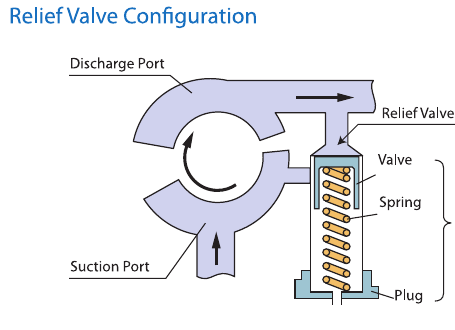
The pressure relief valve: excess pressure pushes the valve against its spring and returns oil to the suction side.
Because the pump's output rises with engine speed, every pump has a pressure relief valve between the discharge and suction ports. When the pressure gets too high, it pushes a small spring-loaded valve open and the surplus oil is sent straight back to the suction side. That keeps oil pressure at the right level instead of rising dangerously at high revs. A relief valve stuck open gives low oil pressure; one stuck shut can overload filters and seals.
Signs of a Failing Oil Pump
The oil pressure warning light flickers at idle or comes on under load.
Tapping or clattering from the top of the engine, especially just after starting, as hydraulic lifters and valve gear run short of oil.
Rising engine temperature, because oil also carries heat away.
Oil leaks around the front of the engine from a failed pump seal or O-ring (front-mounted pumps).
Variable valve timing faults, where the system relies on oil pressure to work.
Check the simple things first. Low oil level, the wrong oil grade, a blocked strainer or a failing pressure sensor can all mimic a failed pump. If the warning light comes on while driving, stop the engine as soon as it is safe and check the oil level before going any further.
Fitting a Replacement Oil Pump
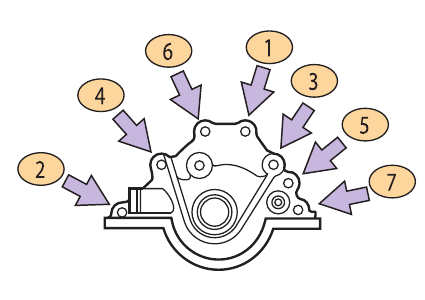
Tighten the oil pump bolts in a diagonal (star) sequence to the manufacturer's torque figure.
Remove the old pump, gasket and any old sealant completely. Clean the mounting face with a non-abrasive solvent and check it is free of damage, distortion and debris - a poor face leaks oil and lowers oil pressure.
Lubricate the new pump with engine oil before fitting, so it primes quickly and doesn't run dry on first start.
Make sure no sand, dirt, lint or debris gets into the pump - contaminants damage the rotors and can jam the relief valve.
Check the oil seal housing for damage, fit the seal and make sure it is seated squarely.
Always use new O-rings and gaskets, and make sure the O-ring isn't pinched between the faces.
Handle the rotors with care - they are precision parts, and a damaged rotor gives poor pressure.
Tighten the pump bolts in a diagonal (star) pattern to the manufacturer's torque - over-tightening cracks the pump body.
Start the engine and let it idle up to normal temperature, then switch off and check the oil level. Running it up purges trapped air from the system; top up to the correct level.
Technical diagrams and failure photos courtesy of AISIN, an original-equipment engine component manufacturer. Always follow the vehicle manufacturer's service manual and torque figures for your specific car.
In Stock Now
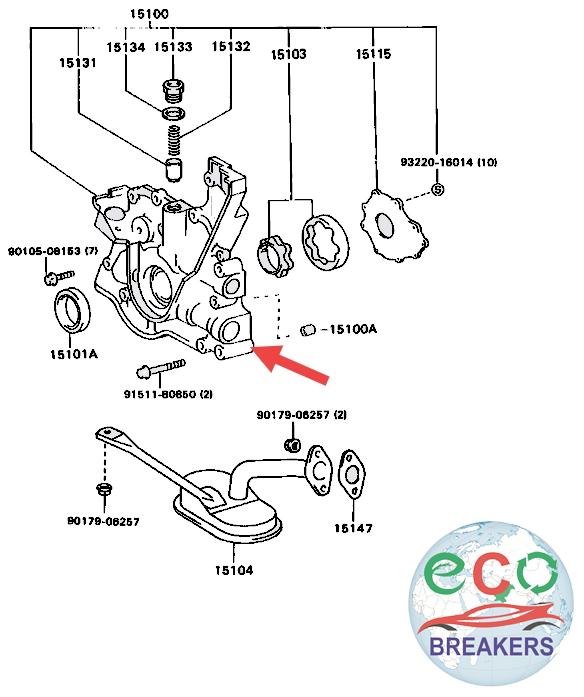
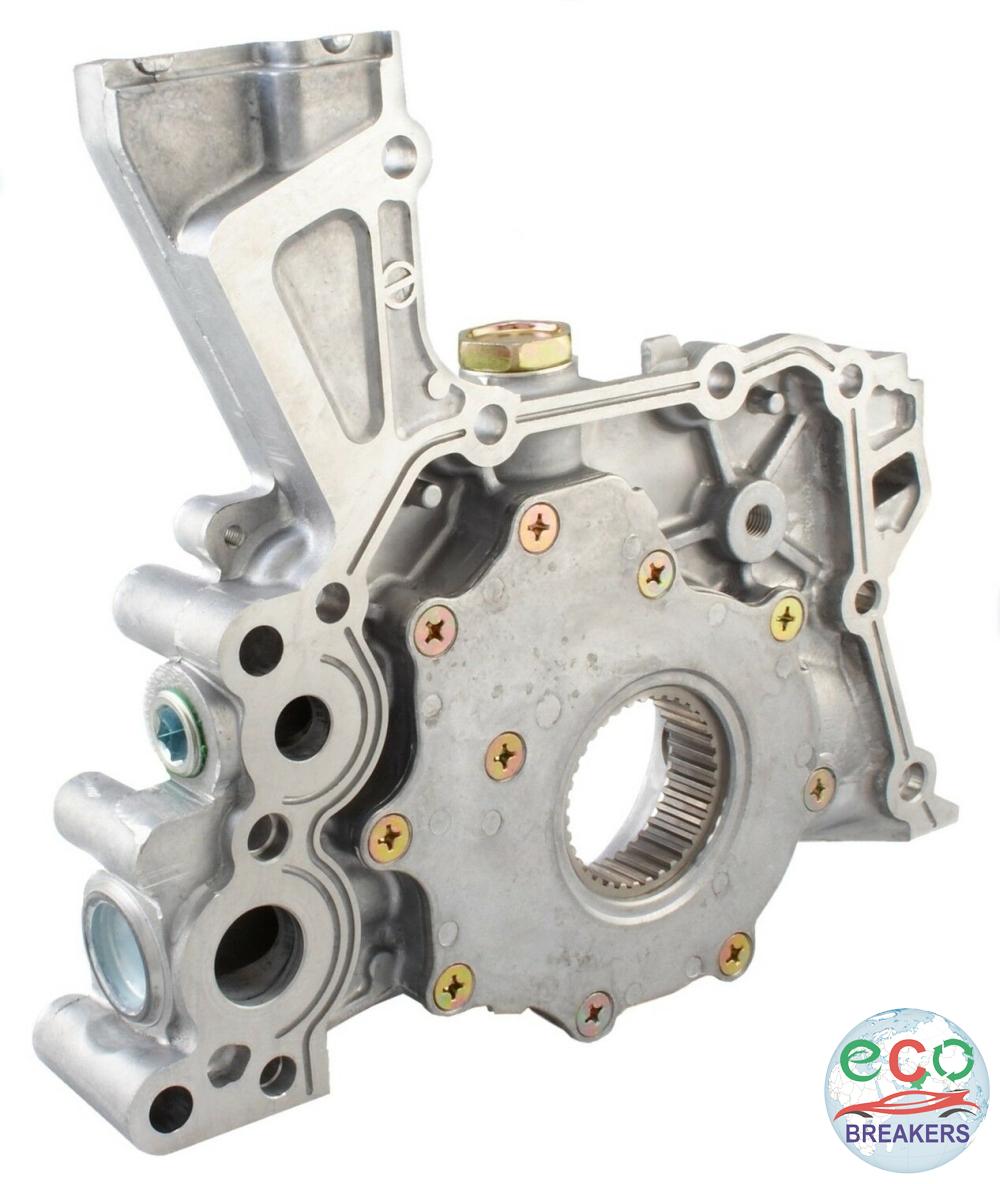
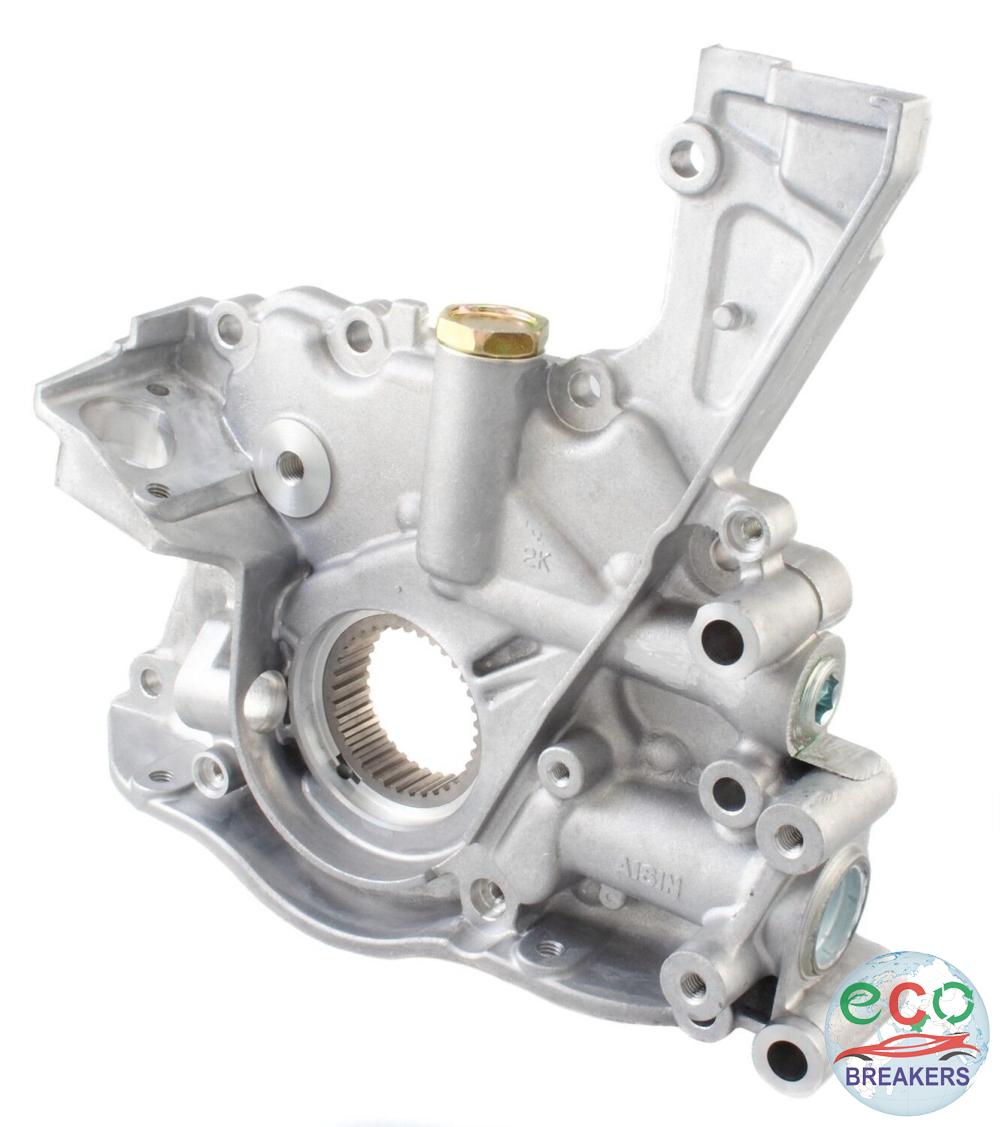
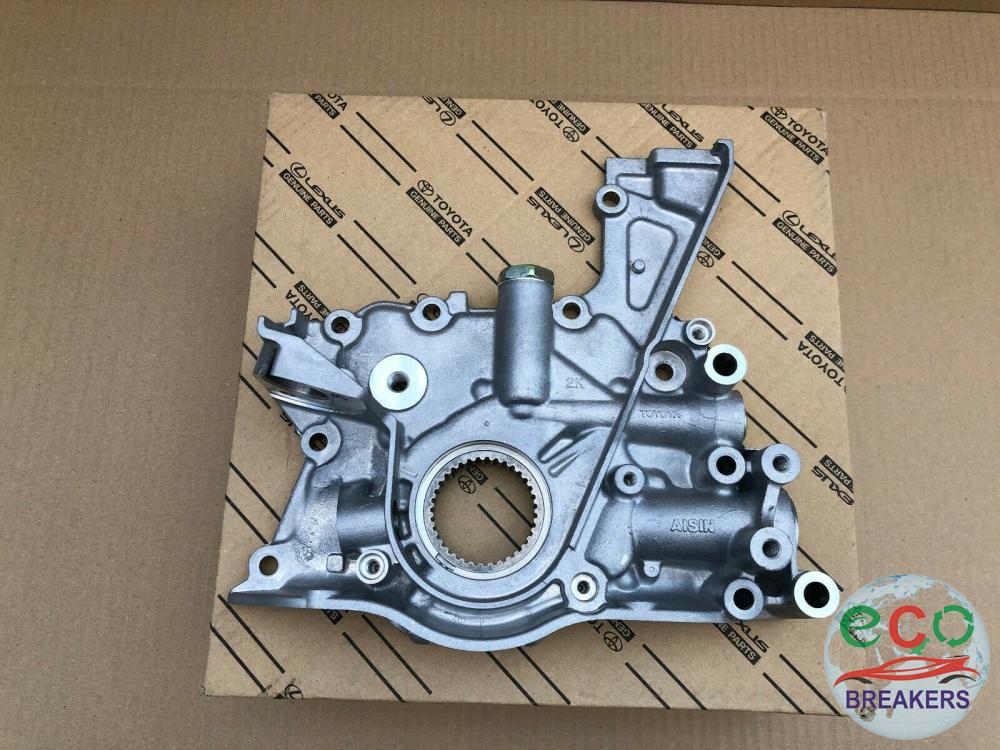
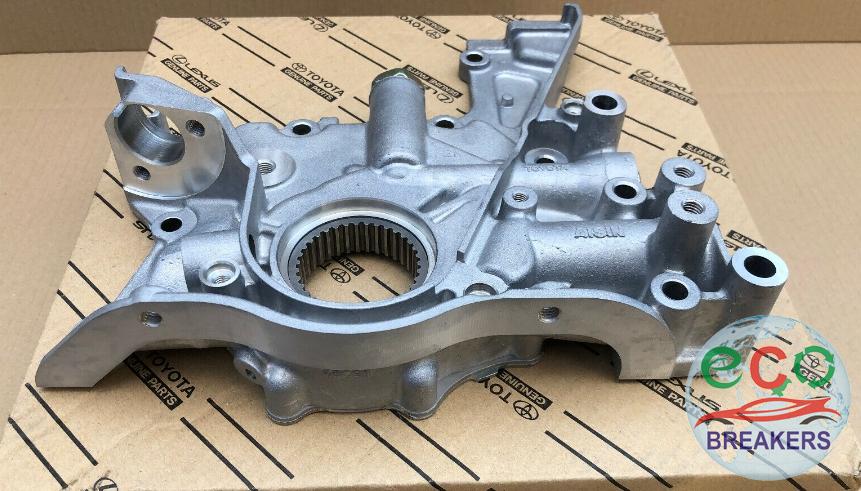
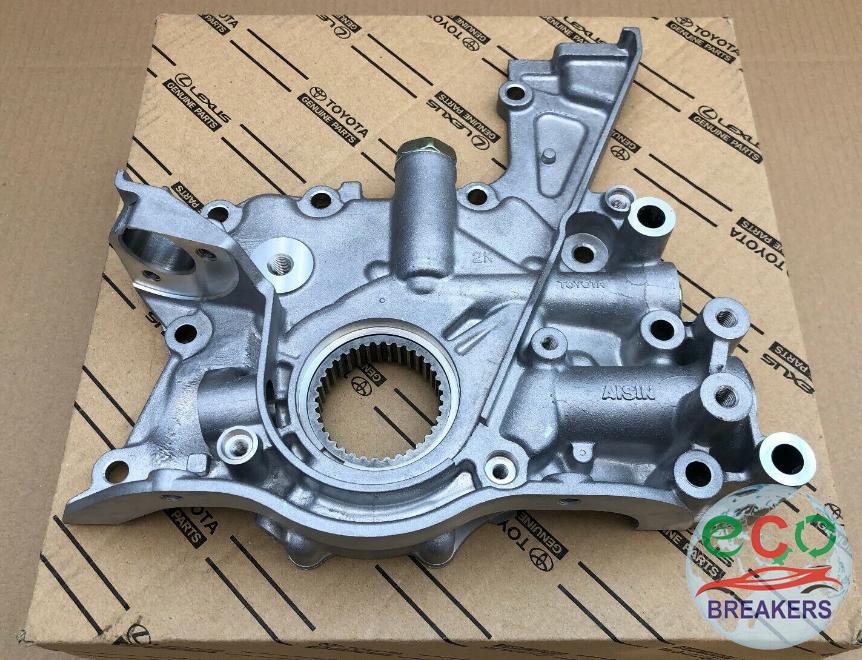
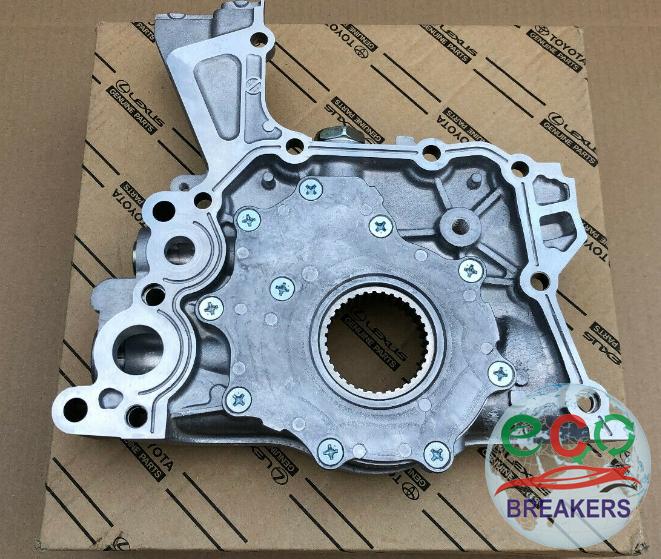
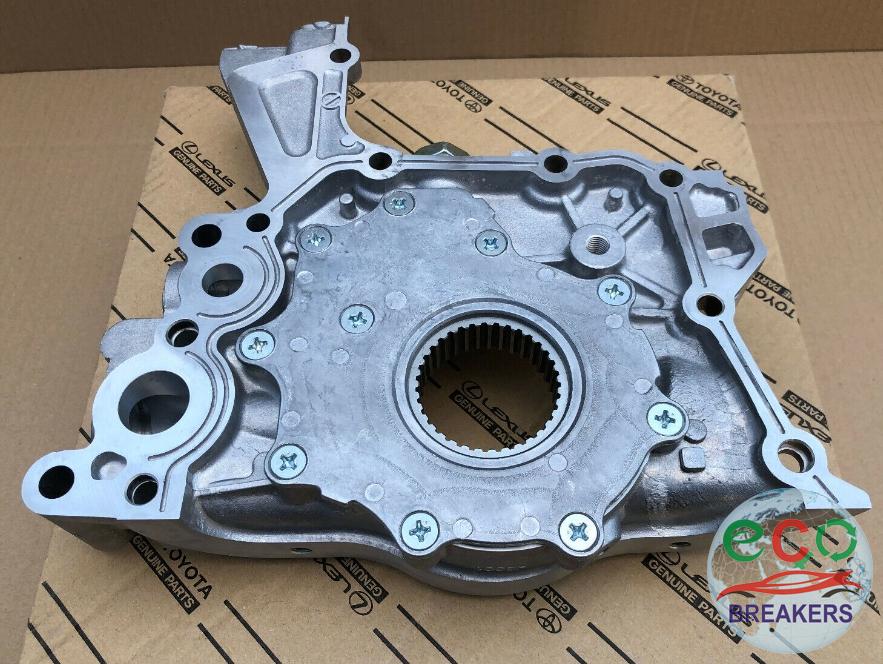
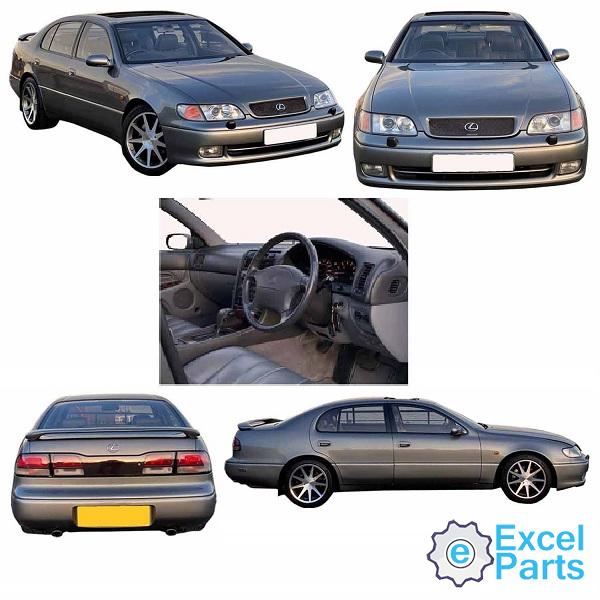
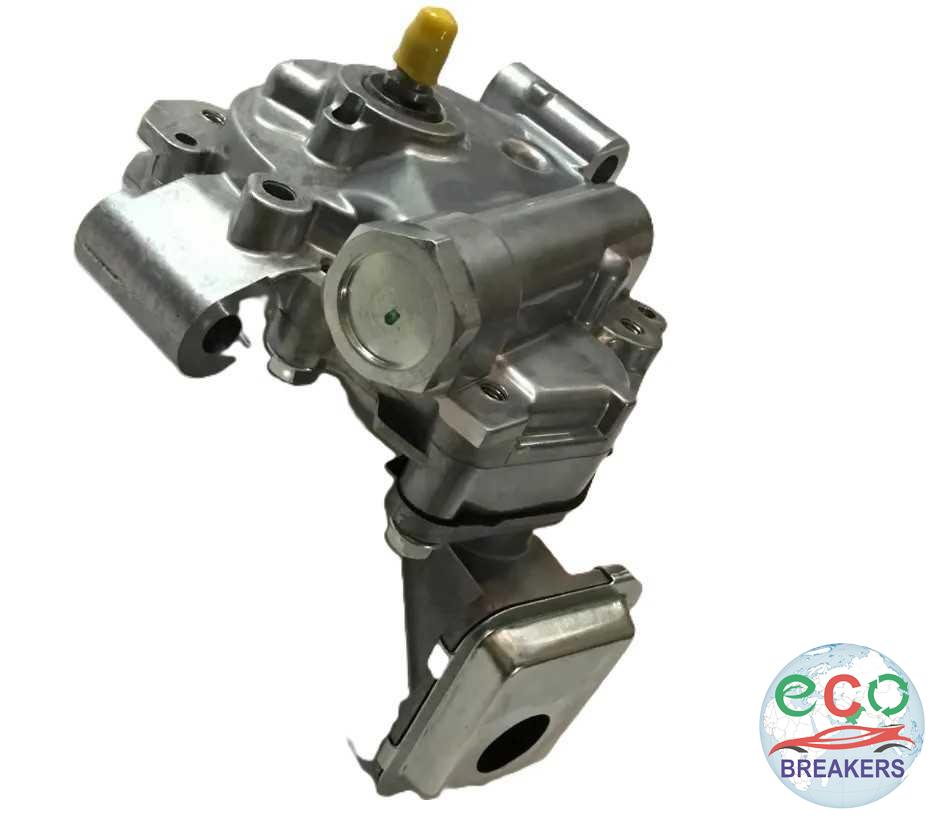
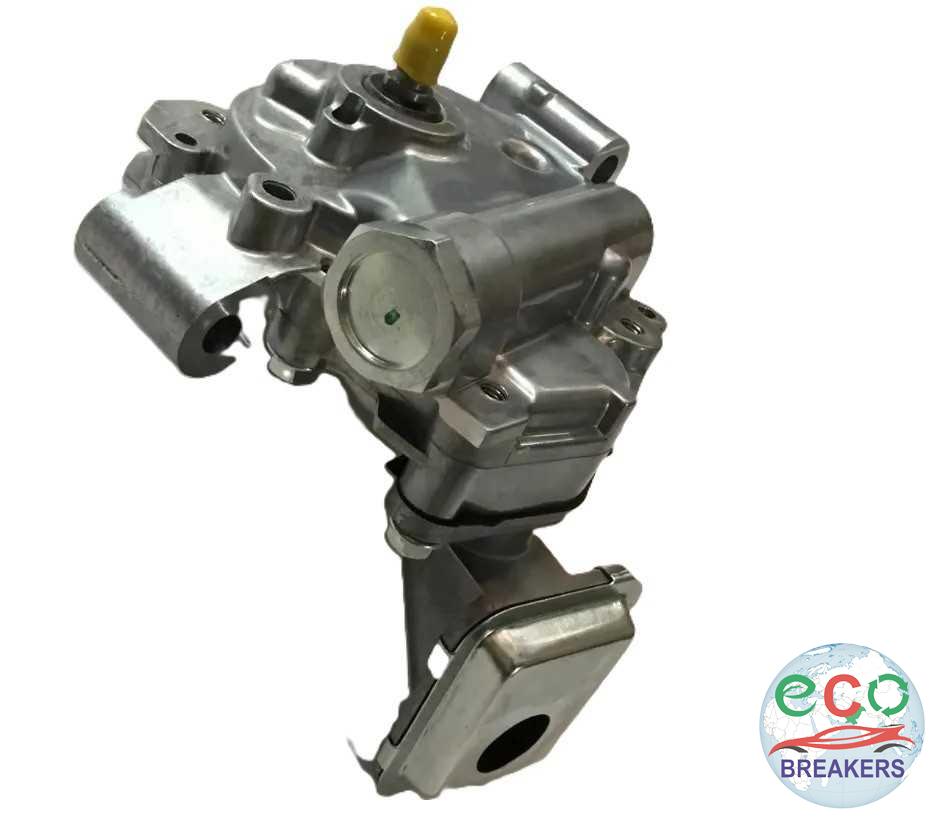
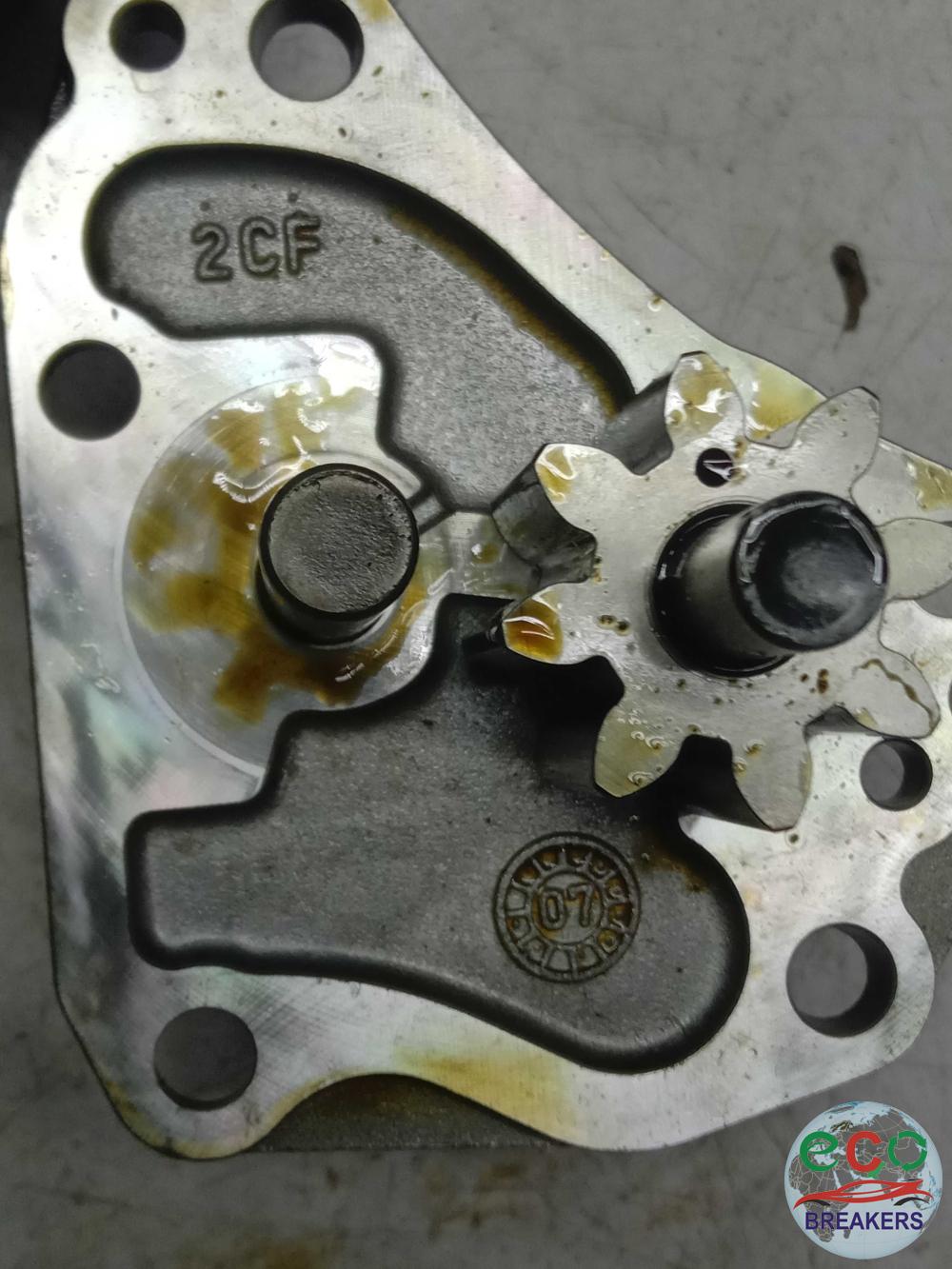
Lexus GS300 MK1 JZS147R Oil Pump 3.0 i 2997 cc Petrol 2JZ-GE 1993 - 1997