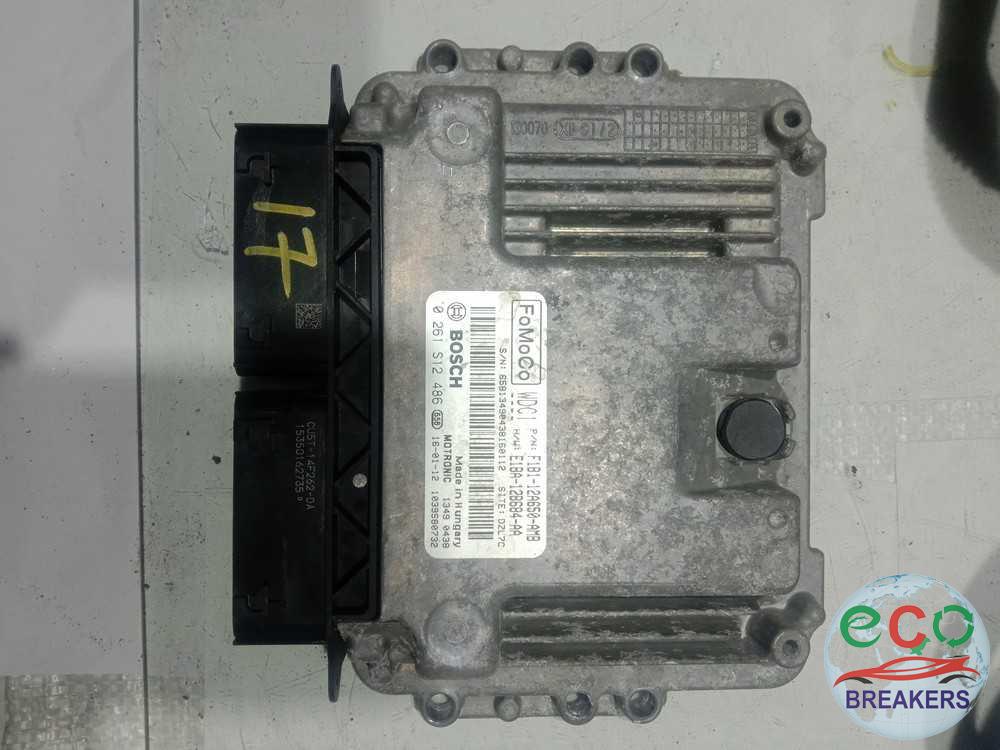
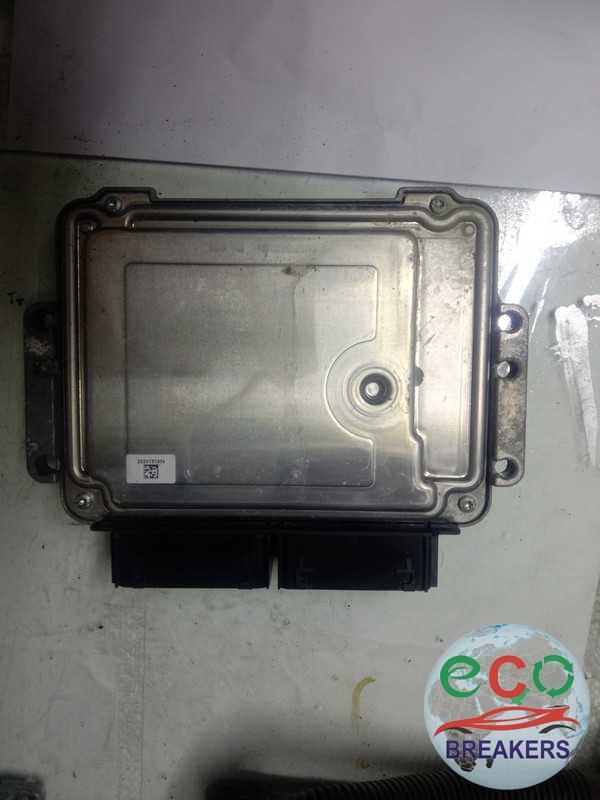
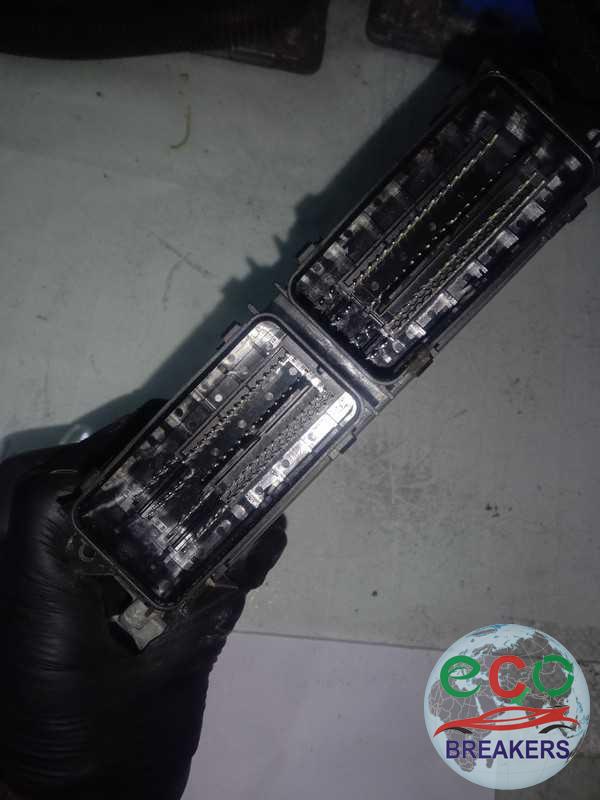
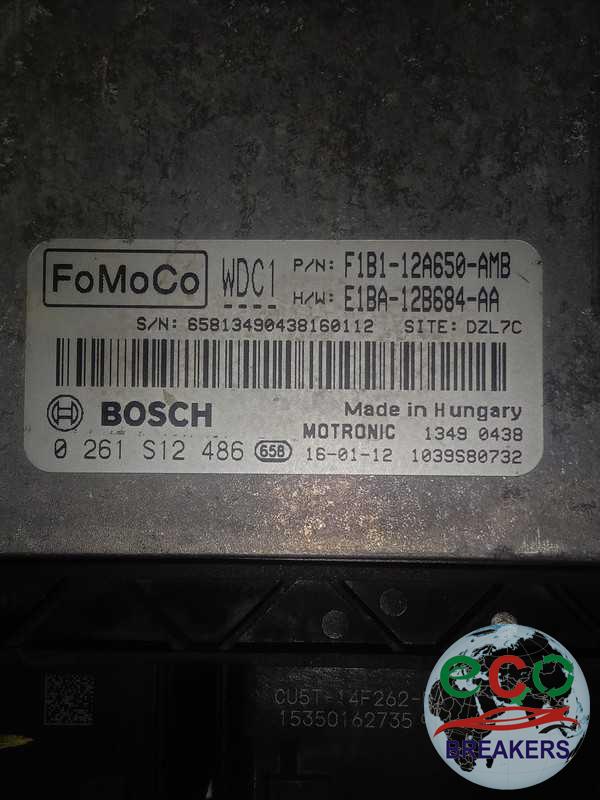
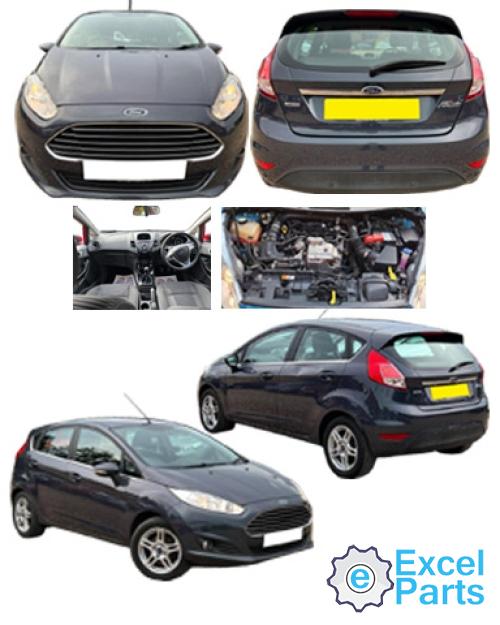
Ford Fiesta MK7 DXXG ECU 1.0 i 0998 cc Petrol SFJA 2013 - 2017 5 MTM 5 Door Hatchback DXXGAKDDB (B299)

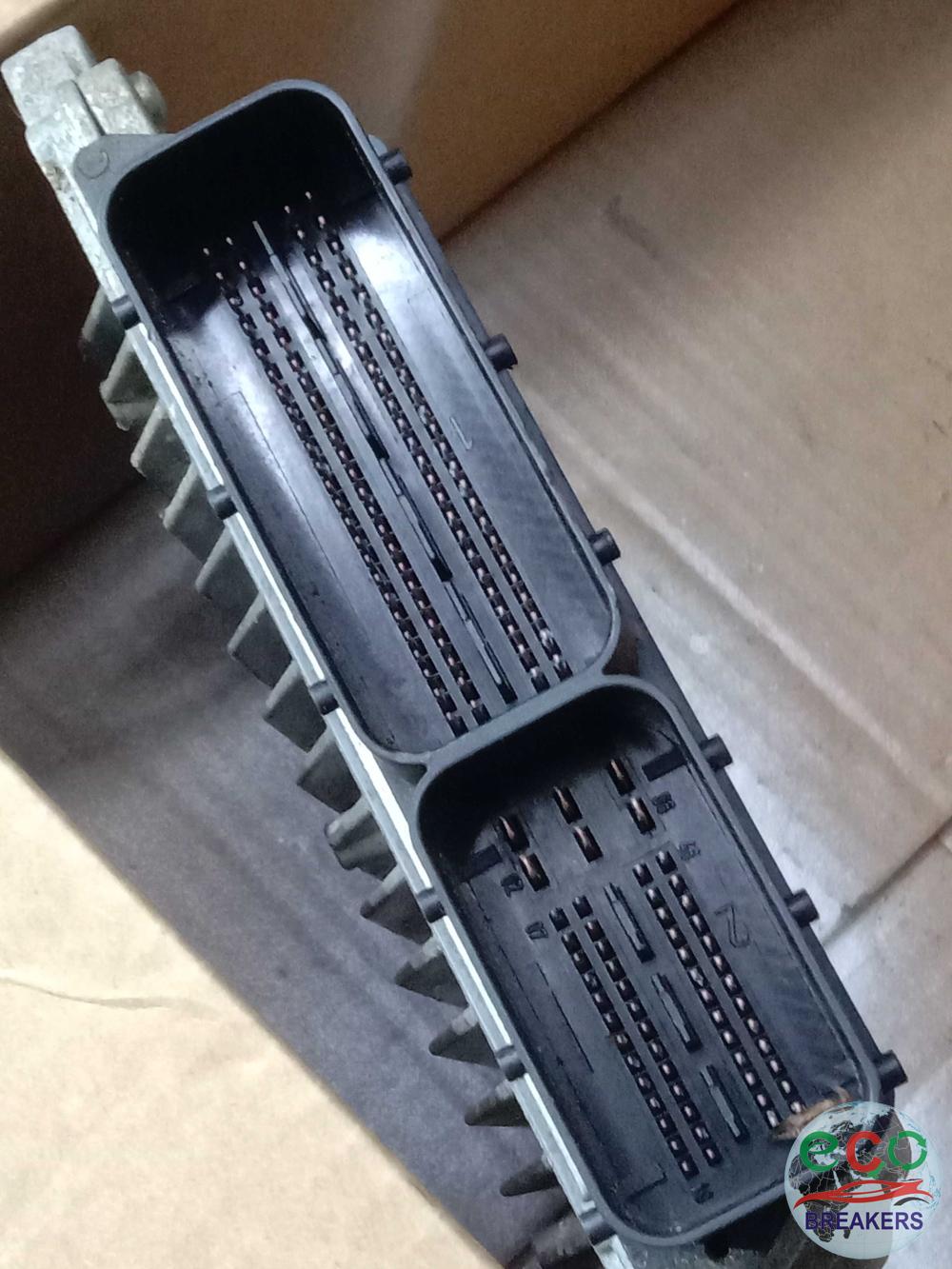
Engine Control Unit Ecu

Ford Fiesta MK7 DXXG ZETEC EURO 5 63 REG 98.6bph Engine Control Unit Ecu E1BA-12B684-AA:RME1BA-12A650-AA:F1B1-12A650-AMB:DZL7C:0261S12486:0 261 S12 486:1349 0438:1039S80732:65813490438160112 1.0 i 0998 cc SFJA 5 Speed Manual DXXGAKDDB (B299) 2013,2014,2015,2016,2017 Petrol Mark7 ZETEC MK7 FL EURO 5 63 REG 98.6bph

Additional Info

1. ECU Overview

ECU Part Numbers:

  • E1BA-12B684-AA / RME1BA-12A650-AA / F1B1-12A650-AMB
  • Bosch Number: 0261S12486 (0 261 S12 486)
  • Software Version: 1039S80732
  • Engine: 1.0L EcoBoost SFJA (998cc, 98.6 bhp)
  • Transmission: 5-Speed Manual
  • Vehicle Model: Ford Fiesta MK7 (2013–2017)
  • Fuel Type: Petrol
  • Emission Standard: Euro 5

ECU Functions:

The Engine Control Unit (ECU) manages critical engine and vehicle operations:

  1. Direct Fuel Injection & Turbocharger Control

    • Adjusts fuel injection timing and pressure for efficiency.
    • Controls the wastegate and boost pressure.
  2. Variable Valve Timing (VVT) Management

    • Controls the Twin-independent Variable Cam Timing (Ti-VCT) system.
  3. Throttle & Idle Control

    • Electronically regulates throttle opening for smooth acceleration.
  4. Cooling System Regulation

    • Adjusts thermostat and coolant flow for optimal temperature.
  5. Emission System Management

    • Monitors Oxygen (O2) sensors, Catalytic Converter (CAT), and EGR system.
  6. Engine Start/Stop System

    • Manages idle stop/start functionality to improve fuel economy.
  7. Turbo Wastegate & Intercooler Control

    • Ensures optimal boost levels without over-boost.
  8. OBD-II Diagnostics & Fault Storage

    • Monitors sensor data and stores Diagnostic Trouble Codes (DTCs).
  9. Communication with Other Modules (CAN Bus)

    • Interfaces with ABS, transmission, immobilizer, and powertrain control module.

2. ECU Installation Process

Pre-Installation Precautions

  • Disconnect the Battery before handling the ECU to avoid damage.
  • Ensure ECU Compatibility by checking part numbers.
  • Use Anti-Static Protection (ESD wrist strap) to prevent static discharge.

Installation Steps

  1. Locate the ECU:

    • Usually found behind the glove box or under the engine bay fuse box.
  2. Remove the Old ECU:

    • Unclip the ECU wiring harness connectors carefully.
    • Remove mounting screws and brackets.
  3. Install the New ECU:

    • Fit the ECU in its original position.
    • Securely reconnect the wiring harness connectors.
  4. Reconnect the Battery and perform ECU programming & immobilizer sync.

  5. Perform a System Check:

    • Use Ford IDS/FDRS software or OBD-II scanner to verify operation.

3. Safety Precautions

  • Avoid Water & Heat Exposure – ECU damage can occur from moisture or excessive heat.
  • Check Wiring Connections – Loose connections may cause engine misfire or no start.
  • Use Genuine Software for Programming – Ford IDS or Forscan is recommended.
  • Perform Throttle & Idle Relearn Procedures for optimal performance.

4. Common Fault Codes (DTCs) & Troubleshooting

The ECU logs DTCs when an issue is detected. Here are some common Ford Fiesta MK7 Zetec ECU fault codes:

DTC Code Description Possible Causes
P0299 Turbocharger Underboost Condition Wastegate issue, boost leaks, turbo failure
P0087 Fuel Rail/System Pressure Too Low Fuel pump issue, clogged filter
P0420 Catalyst System Efficiency Below Threshold Faulty catalytic converter, O2 sensor issue
P0171 System Too Lean (Bank 1) Vacuum leak, MAF sensor fault, fuel pressure problem
P0300 Random/Multiple Cylinder Misfire Detected Spark plugs, ignition coil, fuel injector issue
P2111 Throttle Actuator Control System Stuck Open Throttle body issue, wiring problem
P0016 Camshaft Position Sensor (Bank 1) Timing chain stretched, sensor issue
P0606 ECM/PCM Processor Fault Internal ECU failure

5. Clearing Fault Codes

Using an OBD-II Scanner (Ford IDS, Forscan, or Generic)

  1. Connect the OBD-II scanner to the diagnostic port (under the steering column).
  2. Turn the ignition ON (engine off).
  3. Read stored fault codes using the OBD-II scanner.
  4. Select \"Clear Codes\" to erase any stored errors.
  5. Restart the engine and check if warning lights reappear.

Manual ECU Reset (Battery Disconnect Method)

  1. Disconnect the battery (-) terminal for at least 30 minutes.
  2. Press and hold the brake pedal for 20-30 seconds (to discharge residual power).
  3. Reconnect the battery and turn the ignition ON (without starting).
  4. Start the engine and let it idle for 5–10 minutes.
  5. Check for any warning lights.

6. Fitment in the Car & Communication with Other Modules

ECU Location:

  • Typically located inside the engine bay, near the firewall.

Communication with Other Modules:

The ECU communicates via the CAN Bus system with:

  1. Instrument Cluster (ICM) – Displays check engine lights and warnings.
  2. ABS & Traction Control System (TCM) – Regulates engine power under wheel slip.
  3. Immobilizer (PATS) – Ensures only programmed keys can start the car.
  4. Turbo & Fuel Injection System – Adjusts fuel-air mixture for best efficiency.
  5. Body Control Module (BCM) – Controls lights, wipers, and other electronics.

7. Summary

Feature Details
ECU Part Numbers E1BA-12B684-AA, RME1BA-12A650-AA, F1B1-12A650-AMB
Engine 1.0L EcoBoost SFJA (998cc, 98.6 bhp)
Functions Turbo control, fuel injection, emissions management, throttle regulation
Installation Steps Disconnect battery ? Remove old ECU ? Install new ECU ? Reprogram (if required)
Precautions Avoid moisture, check wiring, use correct software
Common Fault Codes P0299, P0420, P0171, P0300, P2111, P0016, P0606
Code Clearing Use Ford IDS, Forscan, or OBD-II scanner, or battery reset
Communication Works with ABS, traction control, immobilizer, turbo system


Write A Review

Car MakeFord
ModelFiesta
VariantMK VI [2008-2019] Hatchback
Year2013
BodyHatchback
Type1.0 EcoBoost
Engine998ccm 100HP 74KW (Petrol)
Car MakeFord
ModelFiesta
VariantMK VI [2008-2019] Hatchback
Year2014
BodyHatchback
Type1.0 EcoBoost
Engine998ccm 100HP 74KW (Petrol)
Car MakeFord
ModelFiesta
VariantMK VI [2008-2019] Hatchback
Year2015
BodyHatchback
Type1.0 EcoBoost
Engine998ccm 100HP 74KW (Petrol)
Car MakeFord
ModelFiesta
VariantMK VI [2008-2019] Hatchback
Year2016
BodyHatchback
Type1.0 EcoBoost
Engine998ccm 100HP 74KW (Petrol)
Car MakeFord
ModelFiesta
VariantMK VI [2008-2019] Hatchback
Year2017
BodyHatchback
Type1.0 EcoBoost
Engine998ccm 100HP 74KW (Petrol)
Car MakeFord
ModelFiesta
VariantMK VI [2008-2019] Hatchback
Year2018
BodyHatchback
Type1.0 EcoBoost
Engine998ccm 100HP 74KW (Petrol)
Car MakeFord
ModelFiesta
VariantMK VI [2008-2019] Hatchback
Year2019
BodyHatchback
Type1.0 EcoBoost
Engine998ccm 100HP 74KW (Petrol)
Company NameRefrence Number
NO
Company NameRefrence Number

Contact: 0121 647 6895 or 0757 8462 919, or info@ecobreakers.co.uk

  1. Special Delivery means the parcel is guaranteed for next-day delivery.
  2. Next-day guaranteed delivery must be confirmed with us before placing your order.
  3. Next-day guaranteed delivery carries an extra postage charge, payable by the customer.
  4. Special delivery charges are non-refundable on return, for any reason, as we pay the courier directly.

Vehicles listed with 1 wheel nut are listed for breaking - if you buy this, you'll receive one wheel nut only. We hold most parts for these vehicles; please contact us and we can list what you need.

Please make sure the part number matches before buying. For compatibility and availability questions, contact us before purchasing. We reply via your eBay-registered email - please make sure it's active. We aim to respond within 48 hours; if you haven't heard back within 5 days, please check your spam folder or try a different email address.

For Compatibility

  • Please provide your registration number, VIN, or part number.
  • Please compare against the listing photos, or ask us for more photos.
  • Body panels are the same across petrol and diesel variants - only mechanical parts differ.

Price Match

  • Please don't compare our prices to the Chinese market - we trade in the UK, in pounds, not in the Chinese market's currency or cost base.
  • Buying locally supports the UK economy and local jobs.
  • Aftermarket parts are sourced internationally (Taiwan, China, Dubai, and elsewhere); import duties, storage, handling and other costs are factored into UK pricing.
  • Our listed prices are competitive; discounts may be available in some cases - ask us.
  • Regular customers are welcome to ask about a discount.

Feedback

  • We use an automated eBay feedback system - positive feedback from you triggers positive feedback back.
  • If you're unhappy with a transaction for any reason, please contact us first so we can resolve it.

Engine Control Function The engine control function is primarily handled by the Engine Control Unit (ECU) or Engine Control Module (ECM). It’s the computer or electronic system responsible for managing and optimizing the performance of the engine in modern vehicles. The ECU/ECM controls various engine functions by adjusting inputs such as fuel injection, ignition timing, air-fuel ratio, and more.
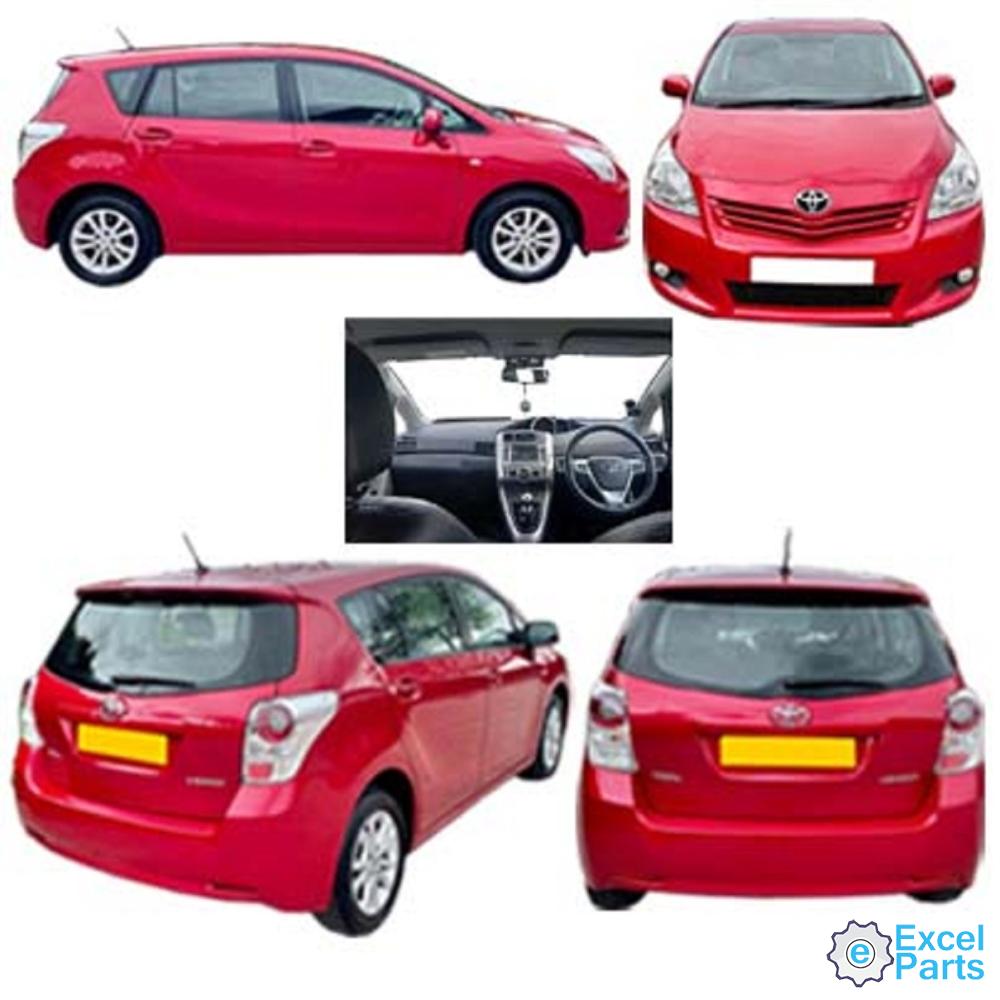
Toyota Verso MK2 AUR20R TR D-4D FD11 12 REG 125bph Engine Control Unit Ecu 2.0 1998 cc Diesel 1ADFTV 1AD-FTV 6 Speed Manual 5 Door Mpv-15964
what precautions should be taken to install donor ecu
What are the most common cause ECU failure?
what are the clear signs of faulity ecu